Scoliosis Treatment Discussions and Chiropractic Care Questions
Chiropractic care and scoliosis discussions should focus on individual evaluation, symptom management, posture support, and coordinated medical care; Advanced Injury Care Clinic assesses spinal movement and develops care around each person's needs.
Request an EstimateWhat Is Scoliosis and How Can It Affect Movement?
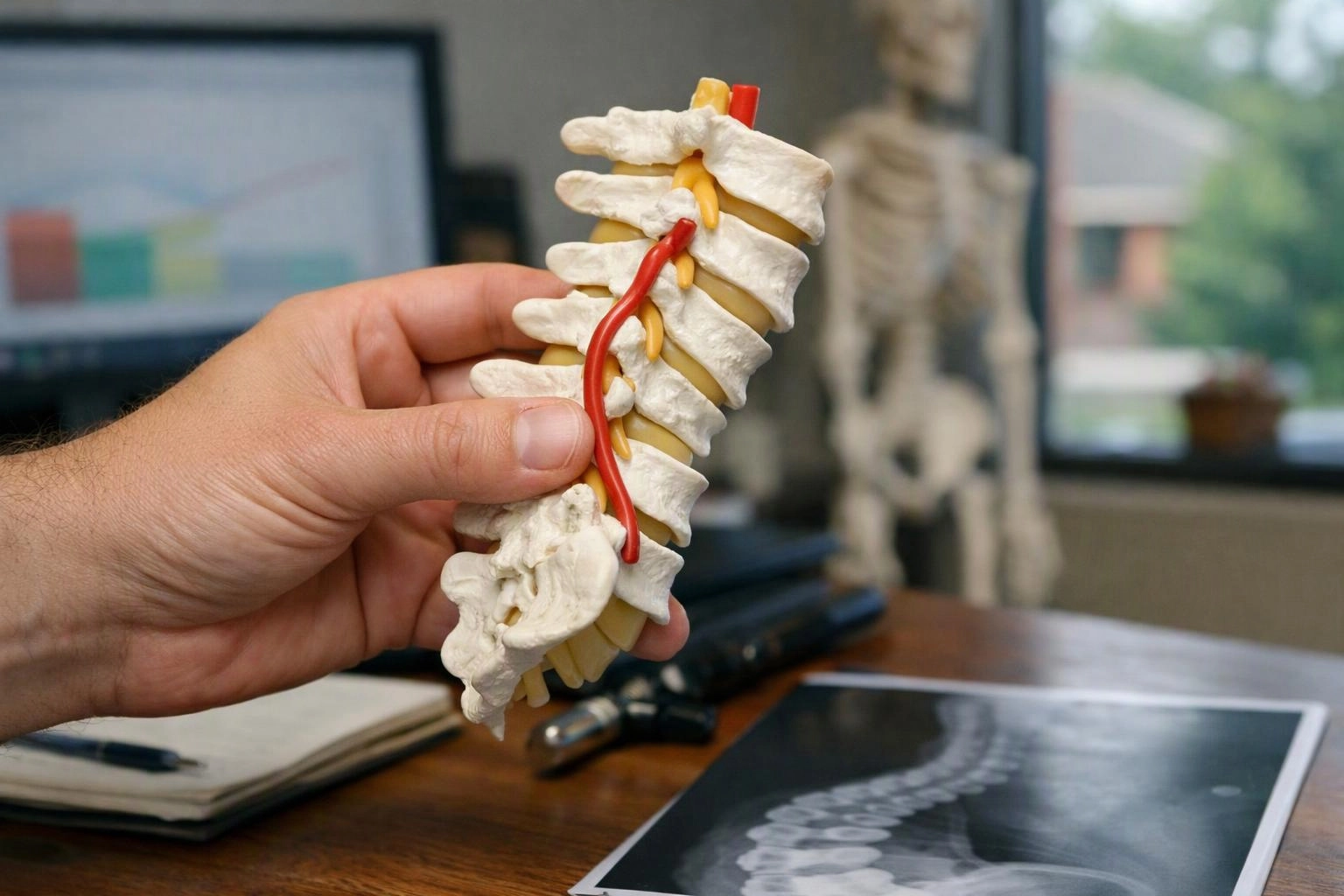
Scoliosis is a spinal alignment condition that can affect posture, movement, muscle balance, and comfort.
Scoliosis involves a sideways curve or rotation of the spinal column. The curve can influence how the shoulders, hips, muscles, and other parts of the musculoskeletal system work together.
Changes in spinal curvature may affect range of motion, joint mobility, and the way a person stands, walks, bends, or lifts. Our team evaluates movement patterns so care addresses the person's symptoms and functional needs.
What Signs and Symptoms Can Scoliosis Cause?
Scoliosis symptoms can appear as visible changes in alignment or as discomfort during daily movement. We consider the full pattern of symptoms during a movement assessment.
Common signs and symptoms include:
How Does Our Team Evaluate Scoliosis-Related Concerns?
Advanced Injury Care Clinic evaluates symptoms, posture, spinal movement, and relevant health history before recommending chiropractic care.
We begin by discussing symptom history, current concerns, previous injuries, and any known diagnosis. Our team then reviews posture, spinal movement, muscle balance, and related changes in daily function.
A physical examination helps us decide whether conservative care is appropriate. When symptoms suggest a need for further assessment, we discuss referral considerations and medical referral options with the patient.
What Can Contribute to Scoliosis-Related Discomfort?
Scoliosis-related discomfort can involve the spinal curve, surrounding muscles, and the way the body responds to restricted movement. We look for contributing factors instead of treating discomfort as an isolated symptom.
Common contributors include:
How Can Posture Correction Support Scoliosis Care?
Posture correction can support scoliosis care by improving movement awareness and reducing avoidable strain, but it does not straighten every spinal curve.
Our team may discuss body awareness, ergonomic positioning, and movement habits that affect daily comfort. We may also address core control and spinal support through guided movement strategies.
Posture work supports symptom management and function. It does not replace medical evaluation when a spinal condition needs orthopedic care or other treatment.
What Prevention Steps May Reduce Postural Strain?
Postural strain may be reduced by using consistent movement habits during work, rest, exercise, and lifting. We help patients connect these habits to their individual movement findings.
Helpful steps include:
Can Chiropractic Adjustments Be Part of Scoliosis Care?
Yes, chiropractic adjustments may be part of scoliosis care when an evaluation shows they are appropriate for the person's symptoms, mobility, and overall health needs.
An adjustment may support spinal mobility, joint movement, or soft tissue tension around areas that feel restricted. Our team selects techniques according to the clinical assessment and the person's comfort.
Chiropractic care focuses on conservative symptom management and function. It is not a promise that a curved spine will be straightened.
What Does a Chiropractic Scoliosis Care Plan Include?
An individualized scoliosis care plan connects clinical findings with practical movement and symptom goals. We review the plan as the person's response and needs change.
When Should Scoliosis Concerns Receive Medical Evaluation?
Scoliosis concerns require medical evaluation when symptoms worsen, neurological changes appear, or breathing and balance become affected.
Contact a medical clinician promptly for worsening pain, numbness, weakness, new balance changes, or breathing concerns. An orthopedic evaluation may help assess the spinal condition and guide treatment decisions.
We support care coordination when a medical referral is appropriate. Chiropractic care can address selected movement and comfort concerns, but it does not replace needed medical assessment.
How Can You Discuss Chiropractic Care for Scoliosis?
A useful scoliosis treatment discussion covers the diagnosis, symptoms, prior care, imaging information, treatment goals, and whether chiropractic care is appropriate.
Bring a clear symptom history and explain which activities affect comfort or movement. Share current diagnosis details, imaging records, and information about other care you receive.
Our team uses that information to discuss realistic goals, conservative options, safety considerations, and care coordination. We offer Free Consultations for people who want to discuss their concerns before deciding on care.
Questions About Scoliosis Treatment and Chiropractic Care
Can chiropractic care straighten scoliosis?
Chiropractic care does not promise to straighten every spinal curve. Advanced Injury Care Clinic focuses on evaluation, spinal mobility, posture support, and symptom management when those goals fit the person's needs.
Is chiropractic care safe for everyone with scoliosis?
Chiropractic care is not automatically appropriate for every person with scoliosis. We review health history, symptoms, mobility, and medical concerns before recommending an adjustment or other conservative care.
Can posture correction help with scoliosis discomfort?
Yes, posture correction can help reduce avoidable strain and improve movement awareness for some people with scoliosis-related discomfort. Posture work supports function, but it does not correct every spinal curvature.
Should someone with scoliosis see a chiropractor or an orthopedic clinician?
The right choice depends on symptoms, diagnosis, and medical needs. We evaluate movement and comfort concerns, while an orthopedic clinician provides medical evaluation when the curve, neurological symptoms, breathing, or balance requires further assessment.
Discuss Your Scoliosis Care Goals With Our Team
Advanced Injury Care Clinic can discuss your symptoms, movement concerns, treatment goals, and whether conservative chiropractic care fits your needs. Use our contact page to request a consultation and begin a focused care discussion.
Get a Free Estimate