Understanding Herniated Disc
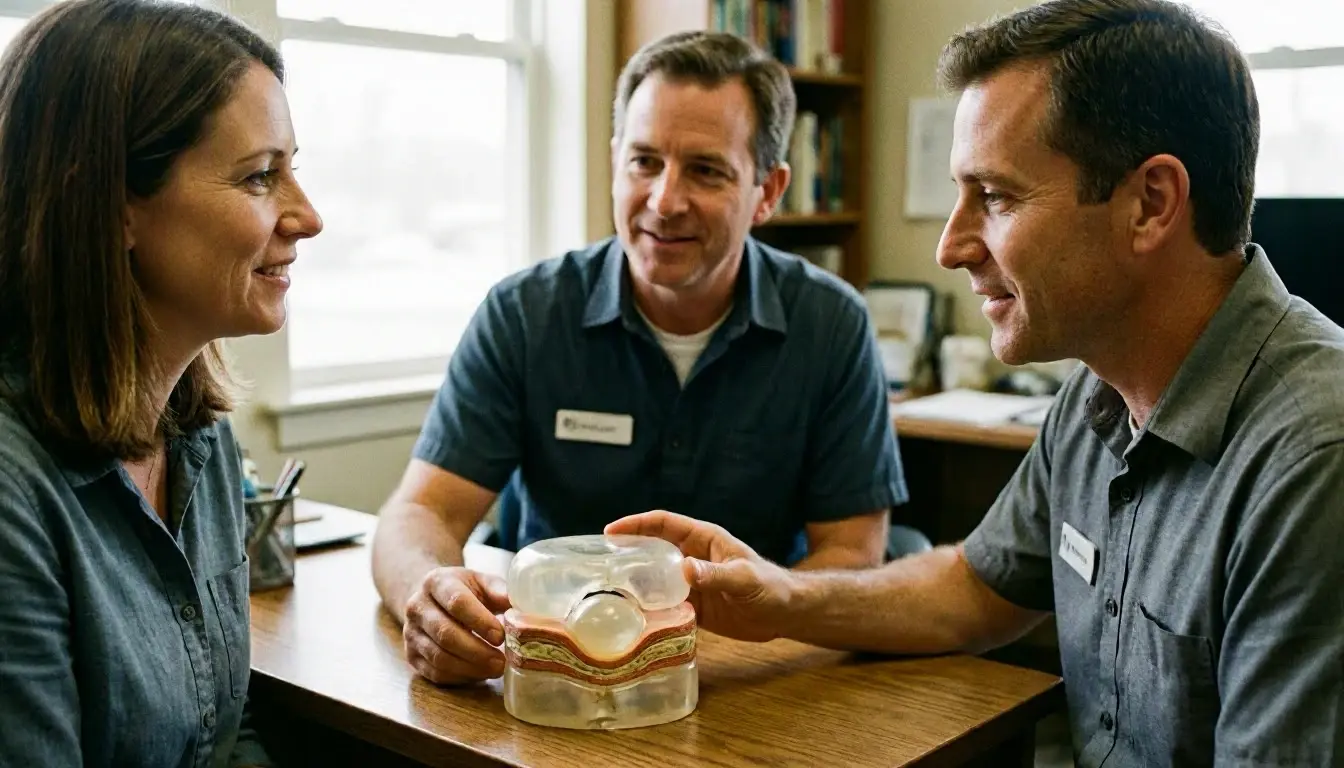
A herniated disc is a common back problem. It's also called a slipped or ruptured disc.
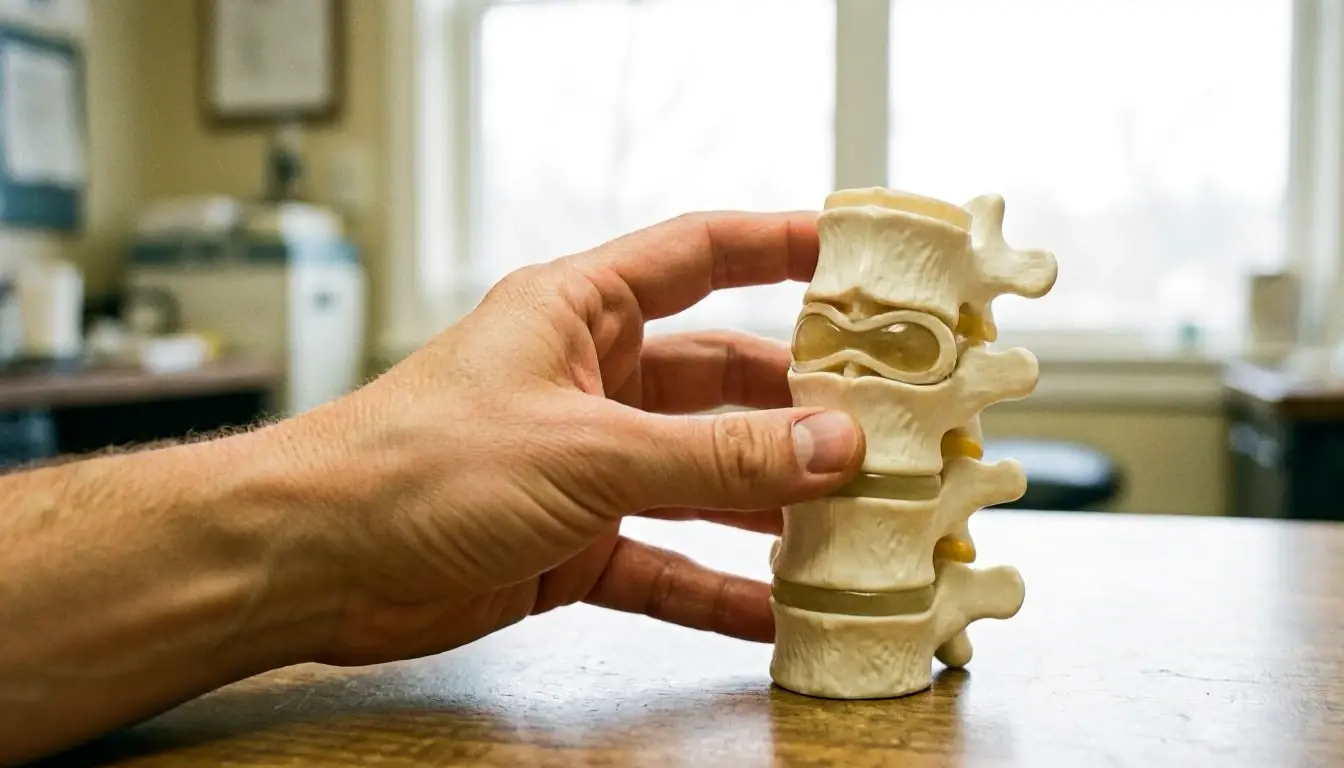
The spine has bones called vertebrae. Soft discs sit between them. These discs act like cushions.
They absorb shock. They help the spine move smoothly. The disc has a soft center.
If the center pushes through a crack, it's herniated. This can press on nearby nerves. That causes pain.
Herniated discs often happen in the lower back. This part is called the lumbar spine.
It holds most of the body's weight. That makes it easy to hurt.
The neck. Or cervical spine, can also have herniated discs. It lets the head move a lot.
This can raise the risk of disc problems. Aging is a natural cause.
But injuries, strain. Or bad lifting can also cause it.
How Herniated Disc Works?
When a disc herniates, it presses on spinal nerves. These nerves go to different body parts.
A herniated disc in the lower back can hurt. It may press the sciatic nerve.
This causes pain down the leg. It's called sciatica.
A herniated disc in the neck can cause pain. It can also cause tingling.
You might feel it in your shoulders, arms. Or hands.
Doctors diagnose a herniated disc with tests. They check reflexes and muscle strength.
They also look for pain spots. Imaging tests like MRI or X-rays help.
They show where the disc is hurt. They also show how bad it is.
Many herniated discs heal on their own. Some need treatment to help.
Why Herniated Disc Matters?
A herniated disc can make daily life hard. Pain may limit what you can do.
You might struggle to sit, stand. Or lift. Numbness or weakness can happen too.
If not treated, it can cause long-term pain. Rarely, it may affect bladder or bowels.
This is called cauda equina syndrome. It's serious but rare.
Early help can ease symptoms. It can make life better.
Knowing the cause helps pick the right treatment. Rest and ice can help first.
Heat and physical therapy may also help. Chiropractic care can ease nerve pressure.
This includes spinal adjustments. It also includes decompression therapy.
If these don't work, shots or surgery may be needed.
When Herniated Disc Matters Most?
Herniated discs matter when they disrupt daily life. Pain that won't go away is a warning.
Numbness or tingling in arms or legs is bad. So is muscle weakness.
Trouble walking is another sign. These may mean nerve damage.
Get help right away if you have these. Some people are at higher risk.
This includes athletes and heavy lifters. It also includes people with tough jobs.
In Hermitage, TN, herniated discs are common. Many people see a chiropractor for help.
Active lifestyles, work injuries. Or car crashes can cause them. Knowing about the condition helps.
It lets people choose the best care. They can try non-surgical help first.