
What Is Neuromuscular Reeducation?
Neuromuscular Reeducation is a clinical training approach that helps the nervous system and muscles coordinate movement more effectively. Practitioners use guided exercises, posture cues, balance tasks, and controlled movement to reinforce useful motor patterns. The approach often supports posture correction by improving awareness of body position and control during everyday activities.
Quick Facts About Neuromuscular Reeducation
Category
Movement retraining
Used for
Posture and motor control
Common confusion
Not simply stretching or strengthening
Also called
Movement retraining, Neuromuscular retraining
Often discussed with
Posture Correction
Key Takeaways About Neuromuscular Reeducation
- It focuses on movement control and body awareness.
- Guided practice connects posture cues with daily movement.
- It is not the same as passive stretching or general strengthening.
How Neuromuscular Reeducation Works
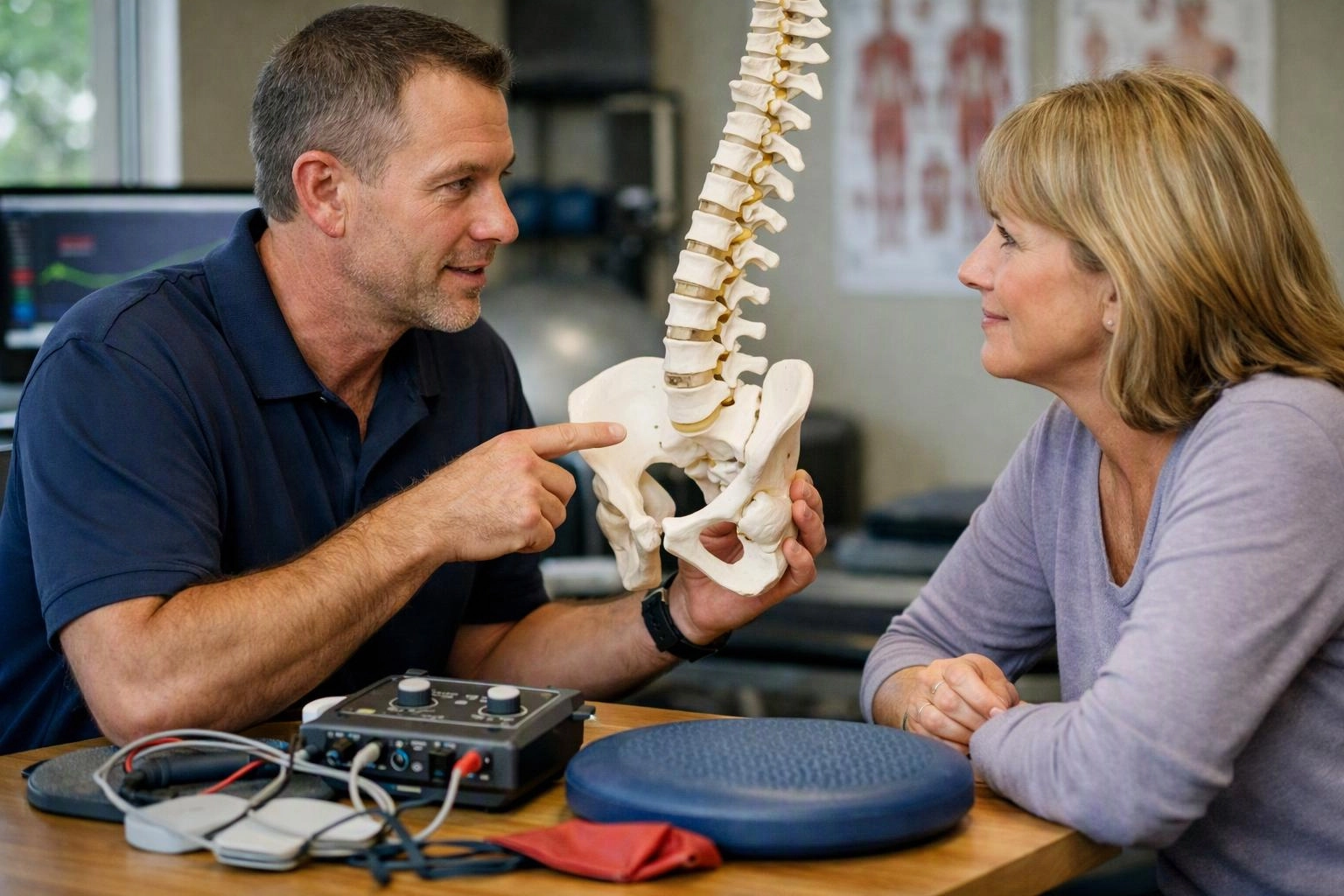
Neuromuscular Reeducation uses repeated, controlled movement to improve how the brain, nerves, and muscles work together. A practitioner observes posture, balance, joint position, and movement quality during a task. The practitioner then adjusts the exercise or cue so the person can recognize and repeat a more controlled pattern.
Related glossary terms: Range of Motion, Gait Analysis, Joint Mobilization.
Posture correction may include awareness of the head, shoulders, spine, pelvis, and feet during standing or sitting. Proprioception, which is the body’s sense of position, helps guide this process. Progress is checked through changes in control, alignment, balance, and the ability to maintain a position during a familiar activity.
From the Advanced Injury Care Clinic team
When we use Neuromuscular Reeducation for Posture Correction, we observe how posture changes during simple movements and daily positions. Our team pairs clear cues with controlled practice, then checks whether the person can repeat the improved pattern without constant reminders.
Neuromuscular Reeducation in Practice: A Real-World Example
A person with forward head posture may practice aligning the head over the shoulders while sitting. The exercise may include gentle position changes and controlled breathing so the person can recognize and maintain better alignment during desk work.
Related Services
Related Terms
Range of Motion
Range of Motion is the amount and direction a joint can move through its available movement…
Gait Analysis
Gait Analysis is the structured observation of how you walk or run. It examines movement patterns…
Joint Mobilization
Joint Mobilization is a hands-on technique that applies controlled, gentle movement to a joint and its…
Advanced Injury Care Clinic
Have Questions About Neuromuscular Reeducation?
Contact Advanced Injury Care Clinic for practical guidance on Neuromuscular Reeducation and related chiropractor work in Hermitage.