
What Is Range of Motion?
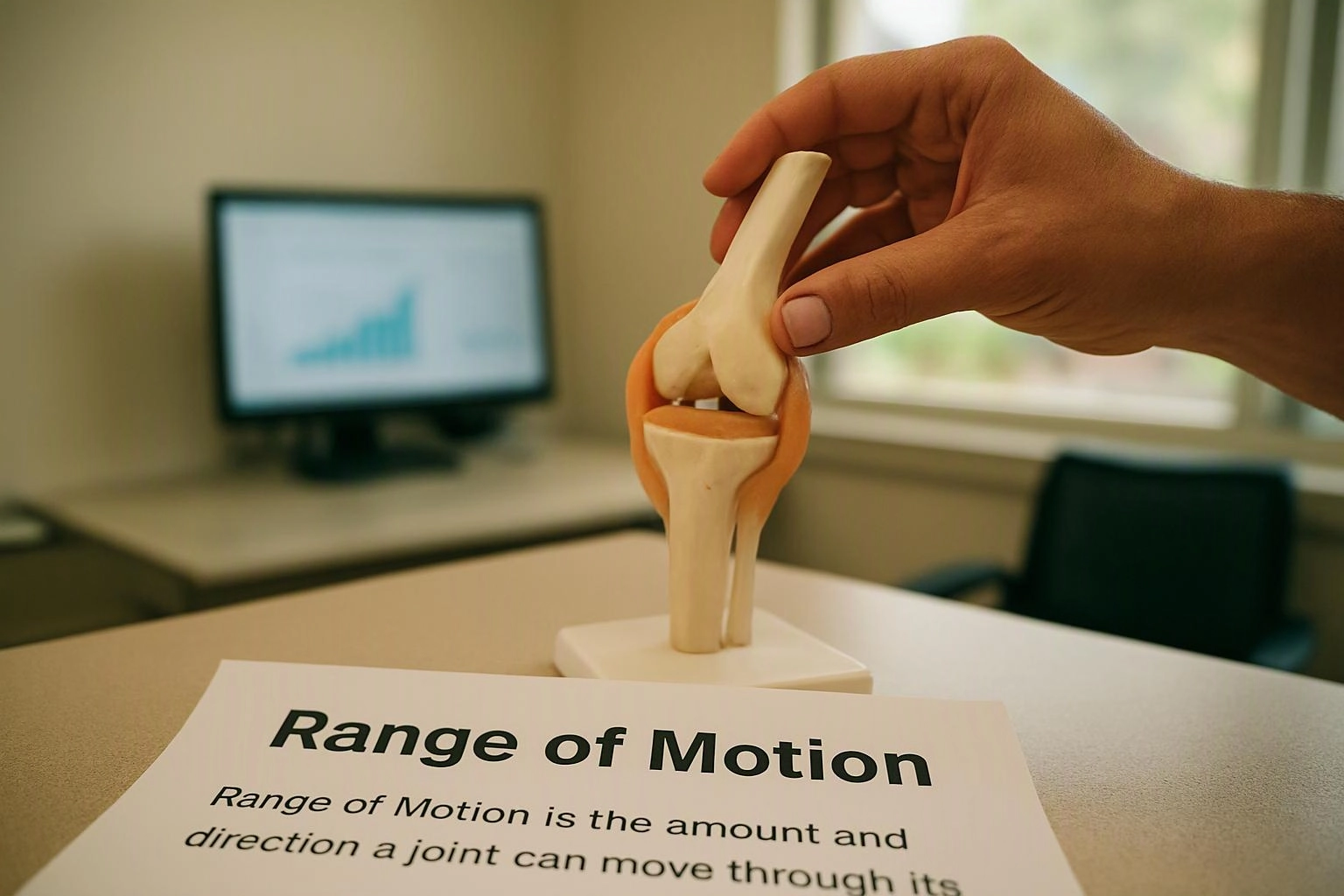
Range of Motion is the amount and direction a joint can move through its available movement. Clinicians assess it through actions such as bending, turning, lifting, or extending a body part. The finding may describe active movement performed by you or passive movement guided by a clinician.
Quick Facts About Range of Motion
Category
Movement assessment
Used for
Checking joint mobility
Common confusion
Mobility and strength are different measures
Also called
ROM, Joint mobility
Often discussed with
Chiropractic Adjustment
Key Takeaways About Range of Motion
- Range of Motion describes movement at a joint, not muscle strength.
- Active movement comes from you, while passive movement is guided.
- Limited movement is not the same as pain intensity.
How Range of Motion Works
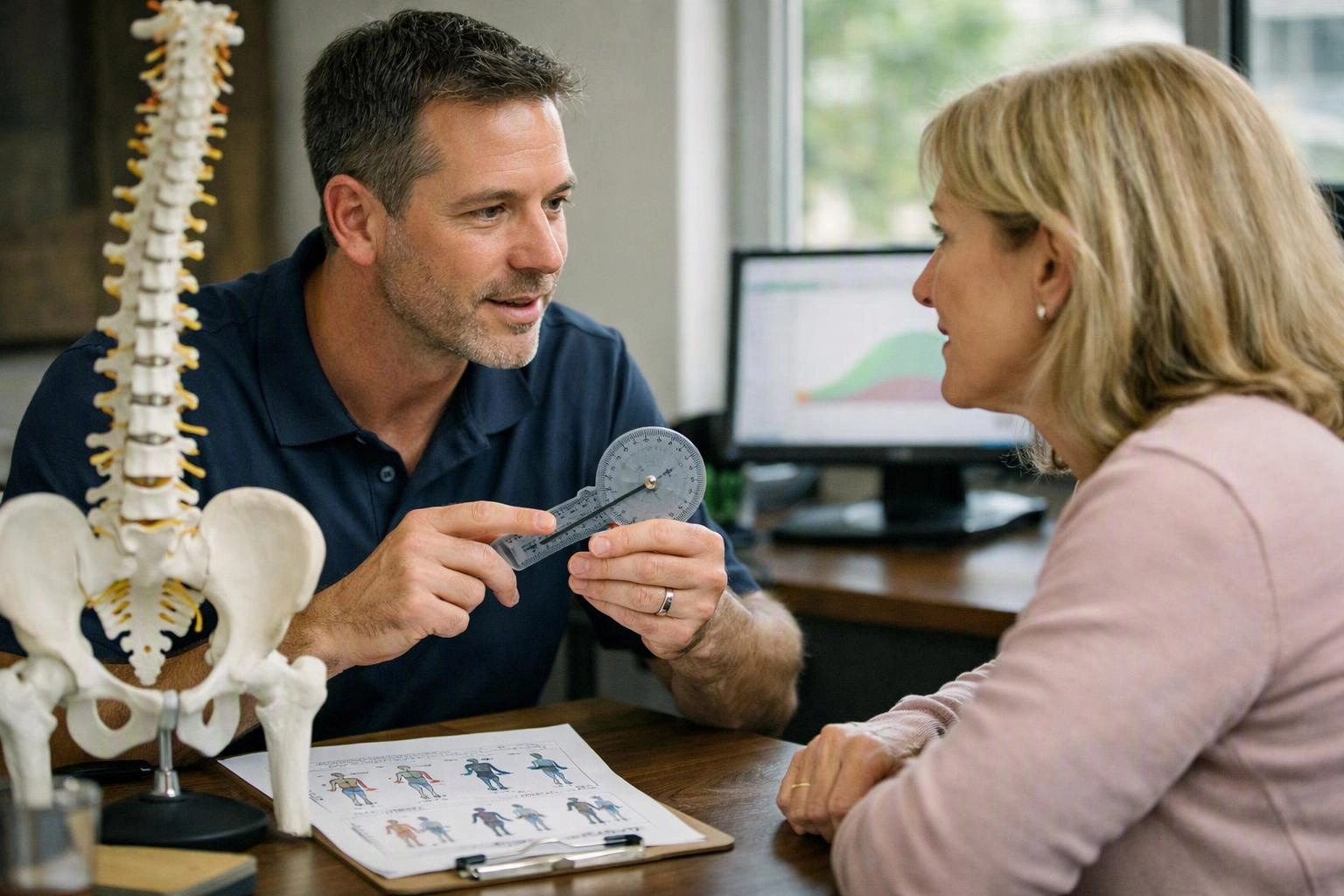
Range of Motion works as an observation of how a joint moves through a direction. You may perform the movement yourself, which shows active motion. A clinician may also guide the body part, which shows passive motion and can reveal how the joint responds when muscles are relaxed.
Related glossary terms: Joint Mobilization, Cervical Spine, Lumbar Spine.
Clinicians may compare movement on one side with movement on the other side. They watch the path, ease, control, and symptoms that appear during the motion. A simple check might involve turning the neck, raising an arm, or bending the lower back. These observations help place joint movement in the context of a chiropractic adjustment.
From the Advanced Injury Care Clinic team
When we prepare for a Chiropractic Adjustment, we check how the relevant joints move and whether the motion feels even and controlled. We consider the movement pattern alongside the person’s reported symptoms and physical findings. These observations help our team select an appropriate adjustment approach.
Range of Motion in Practice: A Real-World Example
A person with neck stiffness may have difficulty turning the head toward one shoulder. During a Chiropractic Adjustment visit, the clinician observes that motion and compares it with movement toward the other shoulder.
Related Services
Related Terms
Joint Mobilization
Joint Mobilization is a hands-on technique that applies controlled, gentle movement to a joint and its…
Cervical Spine
Cervical Spine is the upper section of the vertebral column located in the neck. It supports…
Lumbar Spine
Lumbar Spine is the lower section of the vertebral column, located between the thoracic spine and…
Sacroiliac Joint
Sacroiliac Joint is the connection between the sacrum at the base of the spine and the…
Advanced Injury Care Clinic
Have Questions About Range of Motion?
Contact Advanced Injury Care Clinic for practical guidance on Range of Motion and related chiropractor work in Hermitage.