
What Is the Sacroiliac Joint?
Sacroiliac Joint is the connection between the sacrum at the base of the spine and the ilium of the pelvis. Each side of the pelvis has one sacroiliac joint. Strong ligaments support these joints, which allow limited movement and help transfer force between the upper body and legs during standing, walking, and changing position.
Quick Facts About Sacroiliac Joint
Category
Pelvic joint
Used for
Assessing lower back and pelvic function
Common confusion
Often confused with lumbar spine or hip pain
Also called
SI joint, sacroiliac articulation
Often discussed with
Back Pain Treatment
Key Takeaways About Sacroiliac Joint
- The joint links the sacrum with the pelvic ilium.
- Movement is limited and supported by strong ligaments.
- Sacroiliac joint symptoms can resemble lower back or hip problems.
How Sacroiliac Joint Works
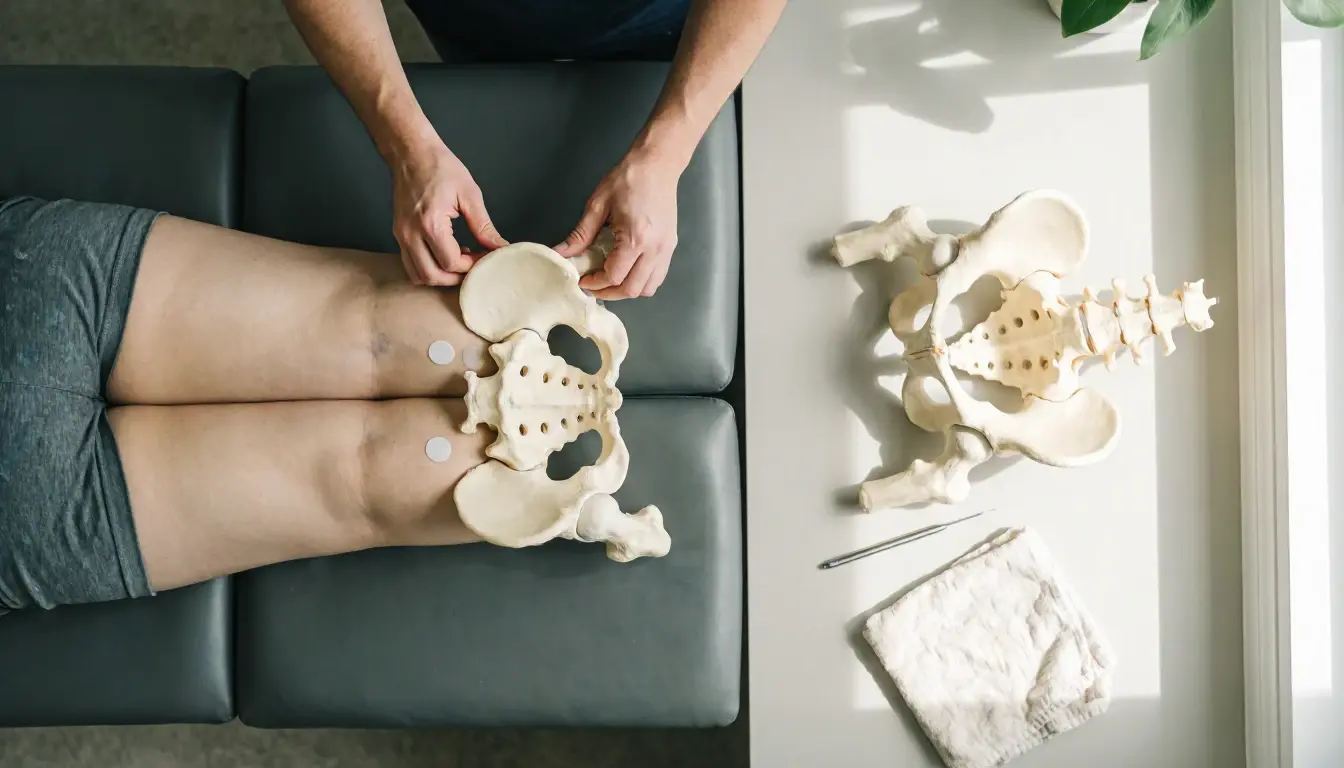
Sacroiliac Joint function depends on the fit between the sacrum and the pelvic ilium. Small movements at the joint help the pelvis respond as you walk, stand, sit, or shift weight. Ligaments and nearby muscles help limit unwanted motion and share load across the lower back and legs.
Related glossary terms: Lumbar Spine, Pelvic Floor, Range of Motion.
A clinical assessment considers the location and pattern of discomfort, movement, posture, and how the pelvis and lower back respond to specific tests. The lumbar spine and hip joint can produce similar symptoms, so the sacroiliac joint is considered alongside those areas. A finding involving this joint does not by itself identify the only source of a person’s symptoms.
From the Advanced Injury Care Clinic team
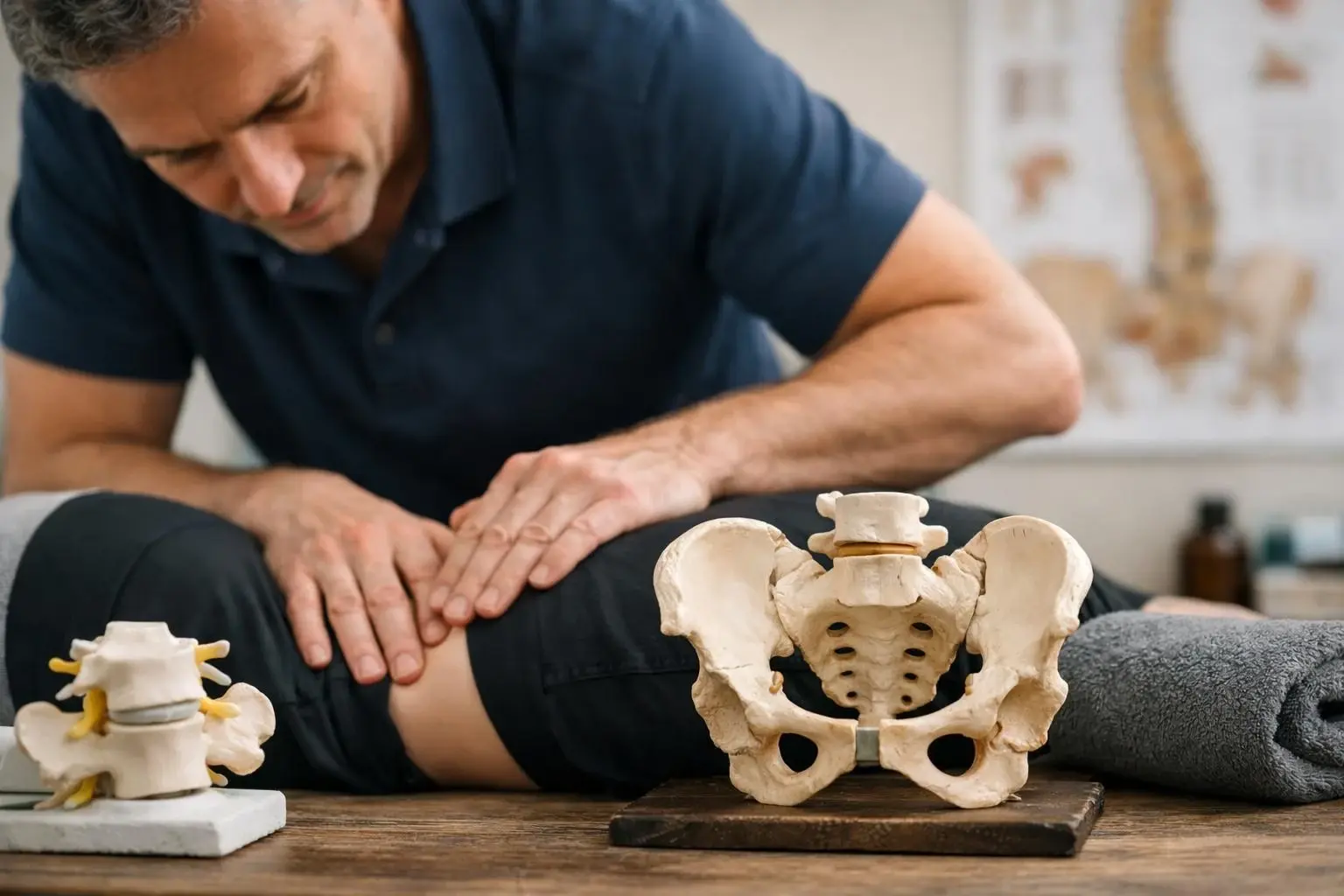
When we assess the sacroiliac joint, we review pelvic and lower back movement together. Our team also considers posture, walking, symptom location, and nearby structures so the assessment supports a focused back pain treatment plan.
Sacroiliac Joint in Practice: A Real-World Example
A person with lower back discomfort may notice symptoms during walking, standing from a chair, or turning in bed. During a back pain treatment visit, the sacroiliac joint is considered along with the lumbar spine and hip.
Related Services
Related Terms
Lumbar Spine
Lumbar Spine is the lower section of the vertebral column, located between the thoracic spine and…
Pelvic Floor
The pelvic floor is a group of muscles and connective tissues that spans the bottom of…
Range of Motion
Range of Motion is the amount and direction a joint can move through its available movement…
Joint Mobilization
Joint Mobilization is a hands-on technique that applies controlled, gentle movement to a joint and its…
Advanced Injury Care Clinic
Have Questions About Sacroiliac Joint?
Contact Advanced Injury Care Clinic for practical guidance on Sacroiliac Joint and related chiropractor work in Hermitage.