
What Is Kinesiology Tape?
Kinesiology Tape is an elastic therapeutic strip placed on the skin to provide light support and sensory input during movement. The tape stretches with the body and may help guide movement, reduce strain on irritated tissues, or support awareness of a targeted area. It does not replace examination or active rehabilitation.
Quick Facts About Kinesiology Tape
Category
Elastic therapeutic tape
Used for
Movement support and sensory feedback
Common confusion
It differs from rigid athletic tape
Also called
Elastic therapeutic tape, KT tape
Often discussed with
Sports Injury Treatment
Key Takeaways About Kinesiology Tape
- Elastic material moves with the skin and underlying tissues.
- Placement depends on the activity and the area being addressed.
- Kinesiology Tape is not the same as rigid athletic tape.
How Kinesiology Tape Works
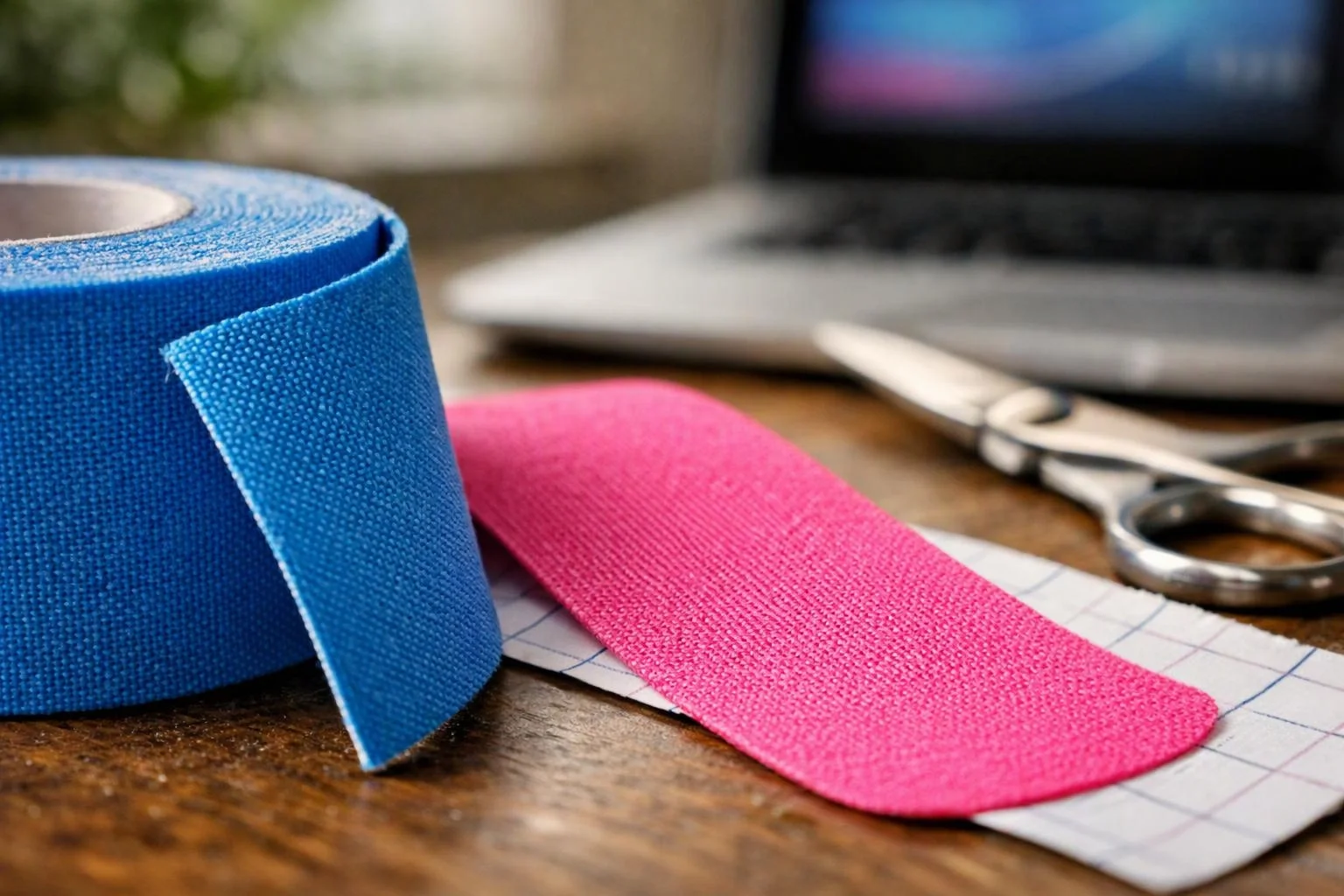
Kinesiology Tape stretches as a person moves, so the material can follow changes in the skin and soft tissues. Its adhesive contact creates gentle tension across the taped area. That tension may increase awareness of movement and help a person adjust how the area moves during activity.
Related glossary terms: Adhesion, Range of Motion, Sprain.
Application depends on the body region, the goal of the taping, and the demands of the sport. A practitioner may place the tape along a muscle, across a joint, or near a tender area. Rigid athletic tape limits motion more firmly, while elastic tape is designed to move with the body. Taping works as one part of sports injury treatment, alongside assessment, exercise, and other appropriate care.
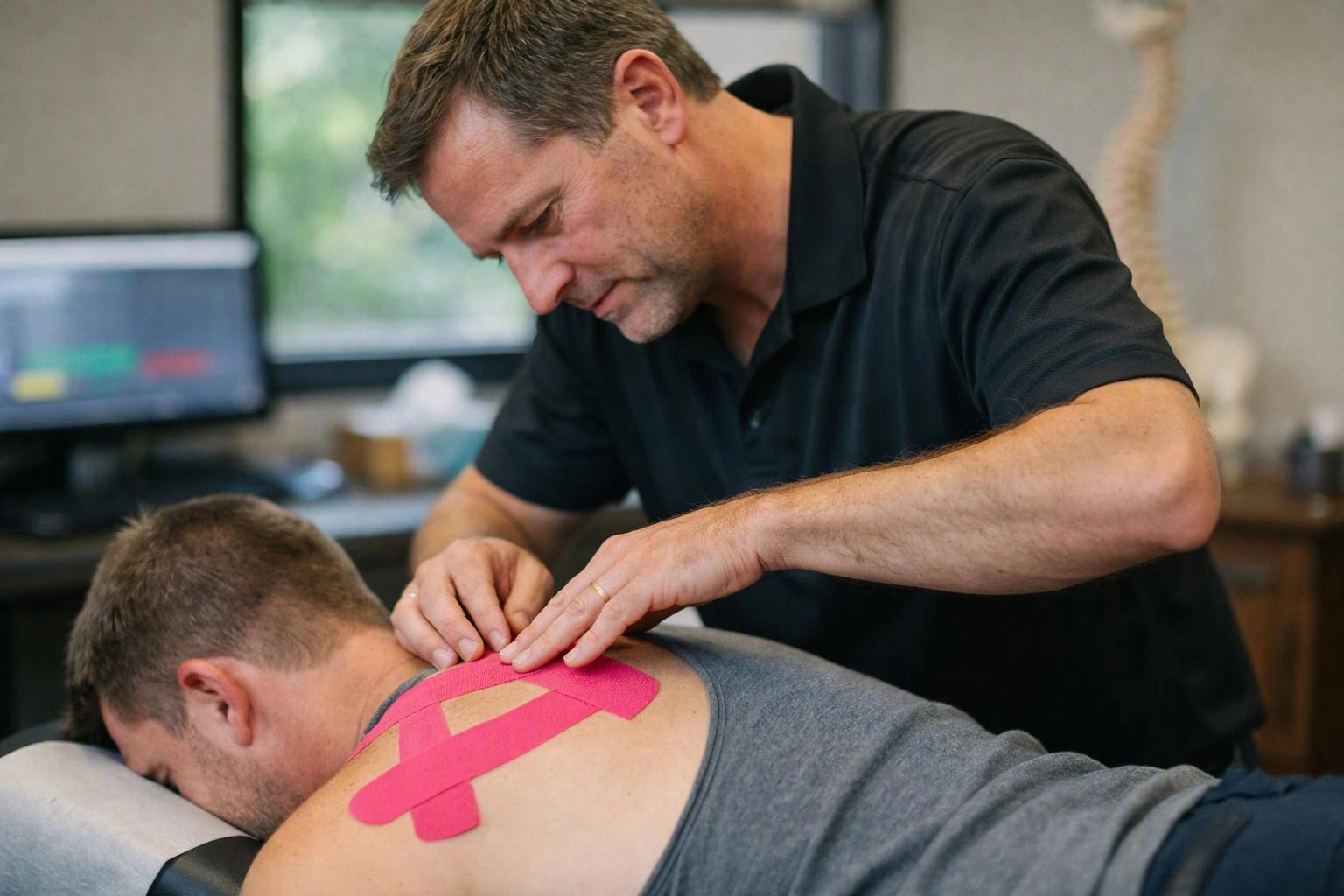
From the Advanced Injury Care Clinic team
When we use Kinesiology Tape, we first check the person’s movement, skin condition, and activity demands. We then choose a placement pattern that matches the area being addressed and observe how movement changes with the tape applied. We also explain that tape supports care but does not replace assessment or rehabilitation.
Kinesiology Tape in Practice: A Real-World Example
A runner with mild ankle soreness may receive Kinesiology Tape along the lower leg and around the ankle during sports injury treatment. The tape can provide movement feedback while the runner follows an appropriate recovery plan.
Related Services
Related Terms
Adhesion
An adhesion is a band of fibrous connective tissue that develops between surfaces that normally move…
Range of Motion
Range of Motion is the amount and direction a joint can move through its available movement…
Sprain
A sprain is a ligament injury caused by stretching or tearing the strong bands that connect…
Strain
A strain is an injury to a muscle or tendon caused by overstretching or tearing tissue…
Advanced Injury Care Clinic
Have Questions About Kinesiology Tape?
Contact Advanced Injury Care Clinic for practical guidance on Kinesiology Tape and related chiropractor work in Hermitage.