
What Is An Adhesion?
An adhesion is a band of fibrous connective tissue that develops between surfaces that normally move separately. Adhesions may form after injury, inflammation, surgery, or repeated tissue stress. In soft tissue care, the term often describes restricted layers that do not glide freely and may contribute to stiffness, tenderness, or limited movement.
Quick Facts About Adhesion
Category
Fibrous soft tissue restriction
Used for
Describing limited tissue glide
Common confusion
Often confused with muscle knots
Also called
Scar tissue adhesion, Tissue adhesion
Often discussed with
Soft Tissue Therapy, Myofascial Release Therapy
Key Takeaways About Adhesion
- Adhesions connect tissue surfaces that should move independently.
- Restricted tissue glide may affect movement and comfort.
- An adhesion is not the same as a muscle knot.
How Adhesion Works
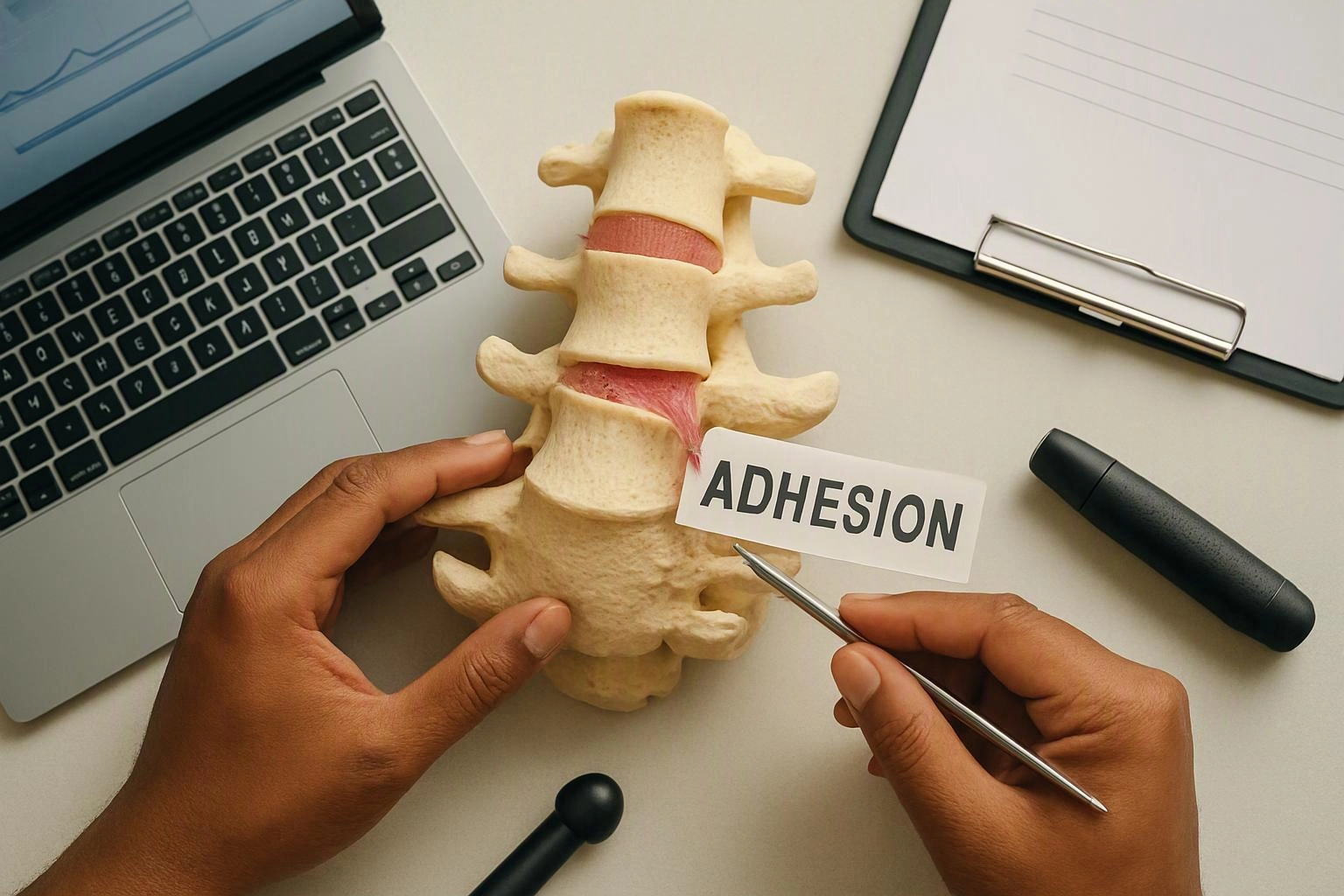
Adhesion changes how nearby tissue layers slide across one another. Fibrous tissue may bind layers that normally move with less resistance. The restriction can develop as tissue heals after injury or irritation. Repeated stress may also affect how the layers move.
Related glossary terms: Fascia, Muscle Knot, Range of Motion.
Soft tissue practitioners assess adhesions through tissue feel and movement. They may compare motion on one side with the other side and check whether a restricted area changes during active or guided movement. Fascia and scar tissue can be involved, although an adhesion is a functional finding rather than a complete diagnosis. Soft tissue techniques may apply controlled pressure and movement to support improved tissue glide. The response of the area helps guide the next part of care.
From the Advanced Injury Care Clinic team
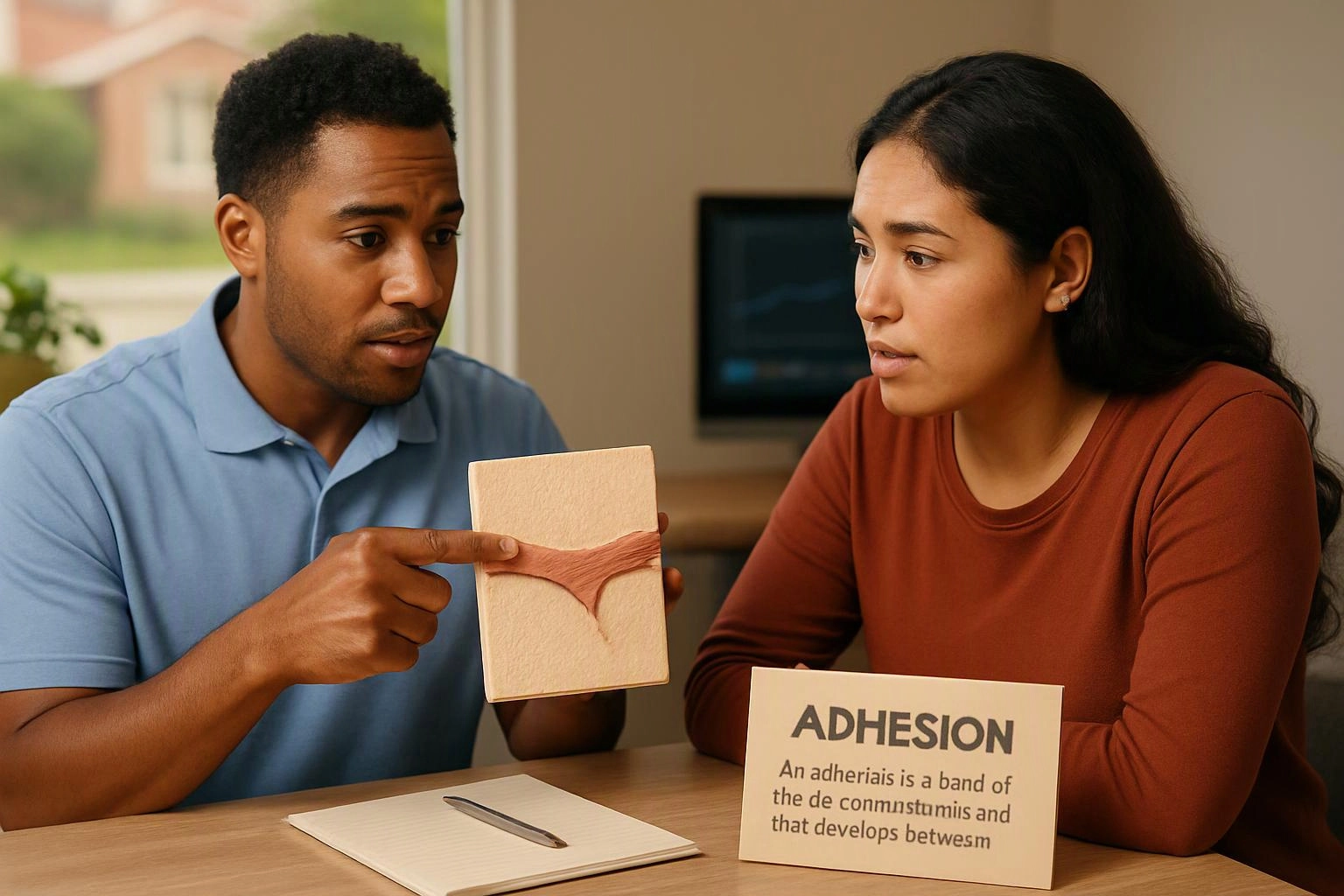
When we assess a suspected adhesion, we check tissue texture, tenderness, and how the area moves during active and guided motion. Our team uses those findings to shape soft tissue therapy and watches how the tissue responds, since restricted glide can vary with position and movement.
Adhesion in Practice: A Real-World Example
A person may notice tightness near a healed ankle injury when the foot bends. During Soft Tissue Therapy, the practitioner may identify a firm area with reduced glide and focus treatment on the surrounding tissue while checking movement changes.
Related Services
Related Terms
Fascia
Fascia is a continuous layer of connective tissue that surrounds muscles, organs, nerves, and blood vessels…
Muscle Knot
A muscle knot is a small area of tight, irritated muscle tissue that feels firm or…
Range of Motion
Range of Motion is the amount and direction a joint can move through its available movement…
Advanced Injury Care Clinic
Have Questions About Adhesion?
Contact Advanced Injury Care Clinic for practical guidance on Adhesion and related chiropractor work in Hermitage.