
What Is a Muscle Knot?
A muscle knot is a small area of tight, irritated muscle tissue that feels firm or tender when pressed. The area may limit comfortable movement and can refer discomfort to nearby regions. Muscle knots often develop after repeated activity, sustained posture, or local muscle strain, although the exact sensation differs between people.
Quick Facts About Muscle Knot
Category
Soft tissue condition
Used for
Describing localized muscle tightness
Common confusion
Joint pain or nerve irritation
Also called
Myofascial knot, Trigger point
Often discussed with
Deep Tissue Massage, Trigger Point Therapy
Key Takeaways About Muscle Knot
- A knot feels tighter and more tender than surrounding muscle.
- Deep tissue massage applies focused pressure to the affected area.
- A muscle knot is not the same as a joint problem.
How Muscle Knot Works
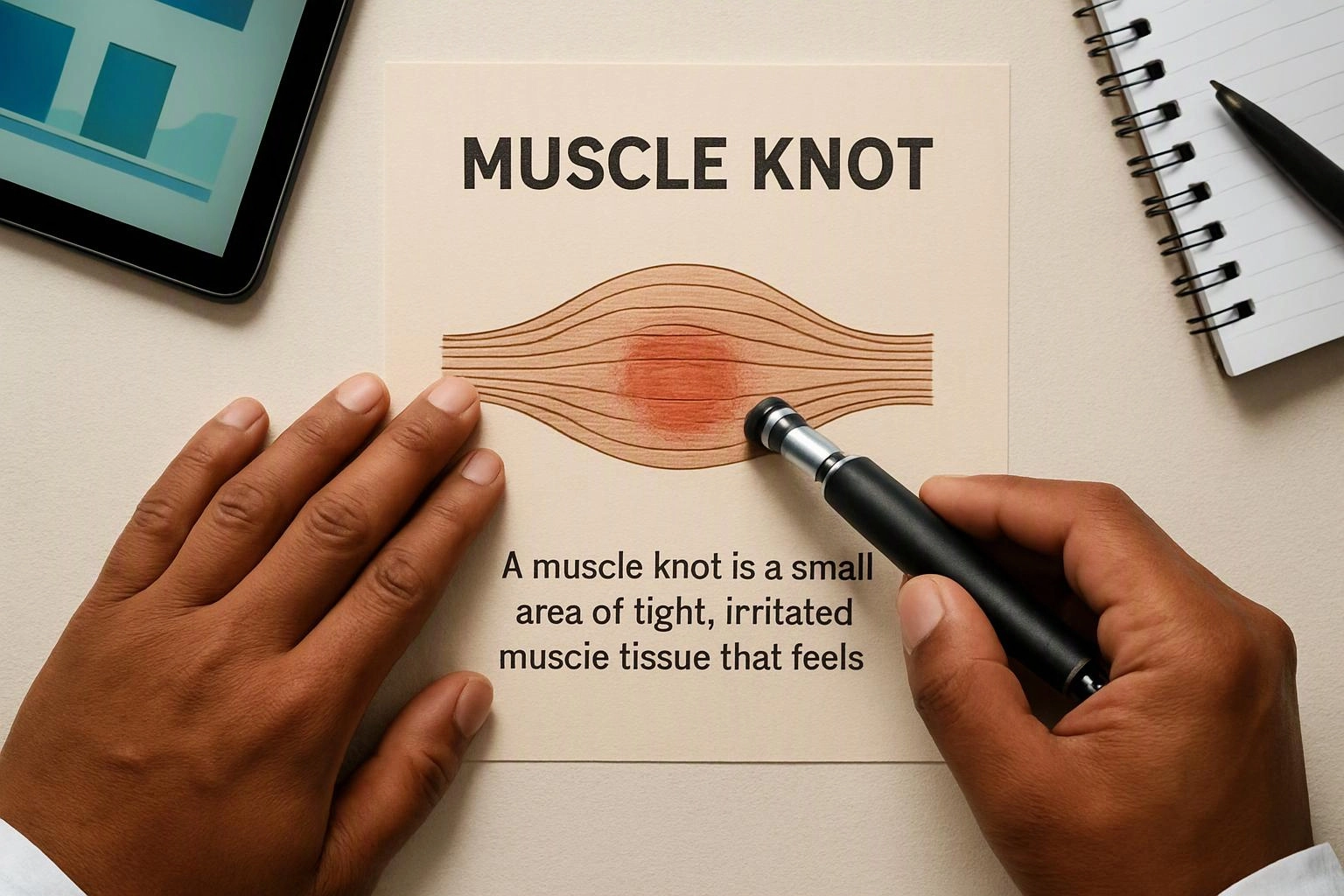
A muscle knot forms when a small section of muscle stays contracted or becomes sensitive after repeated loading. The area may feel denser than nearby tissue, and pressure can produce local tenderness or discomfort that spreads slightly. Movement, posture, and recent activity help explain how the area behaves.
Related glossary terms: Range of Motion.
During Deep Tissue Massage, a practitioner assesses the tissue by feeling for changes in tension and sensitivity. Focused pressure and slow strokes address the involved muscle while the surrounding tissue remains part of the assessment. The goal is to support easier tissue movement and a more comfortable range of motion. A knot may change during the session, so pressure and technique should match the tissue response.
From the Advanced Injury Care Clinic team
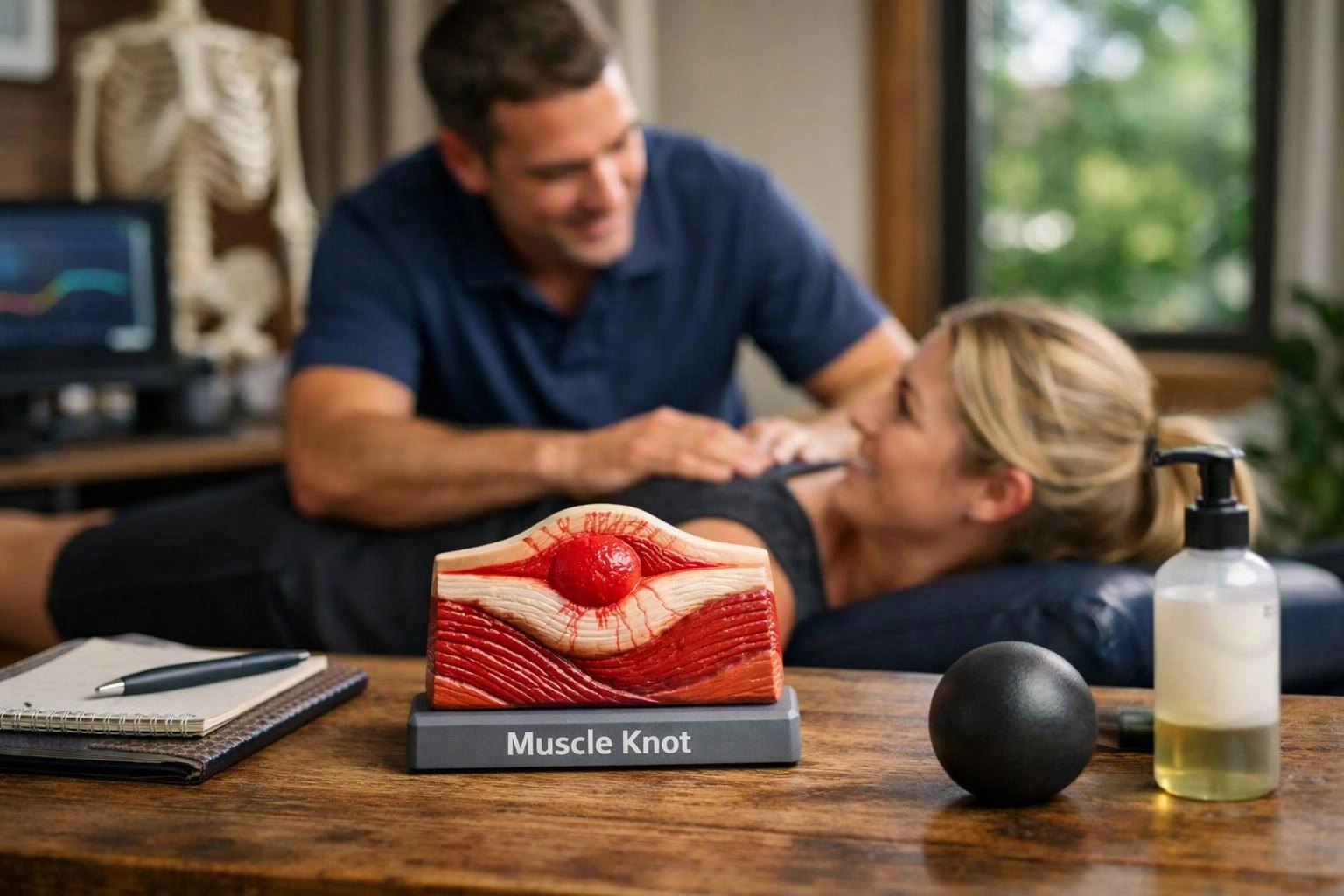
When we assess a muscle knot during Deep Tissue Massage, we consider its location, tenderness, and effect on nearby movement. We work through the surrounding soft tissue as well as the most sensitive area, then adjust pressure to the tissue response. This approach helps distinguish localized muscle tension from discomfort linked to another structure.
Muscle Knot in Practice: A Real-World Example
A person who spends much of the day at a desk may notice a tender, tight area near the upper shoulder. During Deep Tissue Massage, the practitioner checks how that tissue responds to pressure and movement before applying focused work.
Related Services
Related Terms
Range of Motion
Range of Motion is the amount and direction a joint can move through its available movement…
Advanced Injury Care Clinic
Have Questions About Muscle Knot?
Contact Advanced Injury Care Clinic for practical guidance on Muscle Knot and related chiropractor work in Hermitage.