
What Is Nerve Impingement?
Nerve Impingement is a condition in which nearby tissue places pressure on a nerve, disrupting normal nerve signaling. Pressure may develop from a bulging disc, narrowed spinal passage, swollen tissue, or altered joint movement. The location of pressure helps determine where symptoms appear, such as pain, tingling, numbness, or weakness.
Quick Facts About Nerve Impingement
Category
Nerve and spine condition
Used for
Describing pressure-related nerve symptoms
Common confusion
Often confused with muscle strain
Also called
Compressed nerve, Nerve compression
Often discussed with
Sciatica Treatment
Key Takeaways About Nerve Impingement
- Pressure on a nerve distinguishes impingement from ordinary muscle soreness.
- Symptoms often follow the path of the affected nerve.
- Nerve impingement is not the same as a muscle knot.
How Nerve Impingement Works
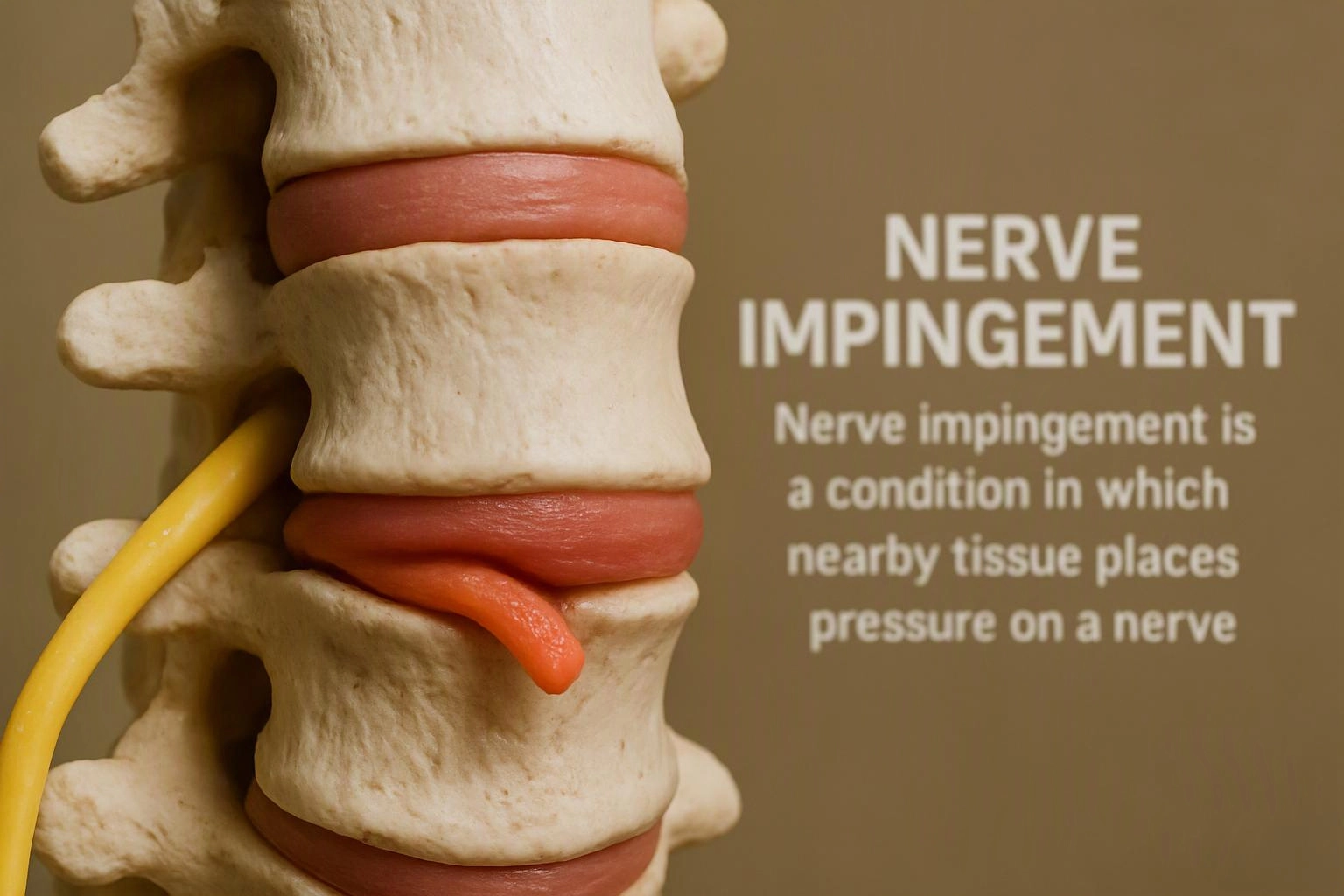
Nerve Impingement describes how pressure near a nerve can interfere with nerve signaling. The pressure may come from a bulging disc, joint changes, muscle tension, or reduced space around the nerve. Symptoms may travel along the nerve's path, which can help identify the region involved.
Related glossary terms: Bulging Disc, Disc Herniation, Sciatic Nerve.
Assessment considers the symptom pattern, movement, strength, sensation, and reflex response. A lumbar nerve issue may affect the lower back, buttock, and leg, while a cervical nerve issue may affect the neck, shoulder, arm, or hand. Sciatic nerve irritation is one example of a nerve-related pattern, but not every leg symptom comes from the sciatic nerve.
From the Advanced Injury Care Clinic team
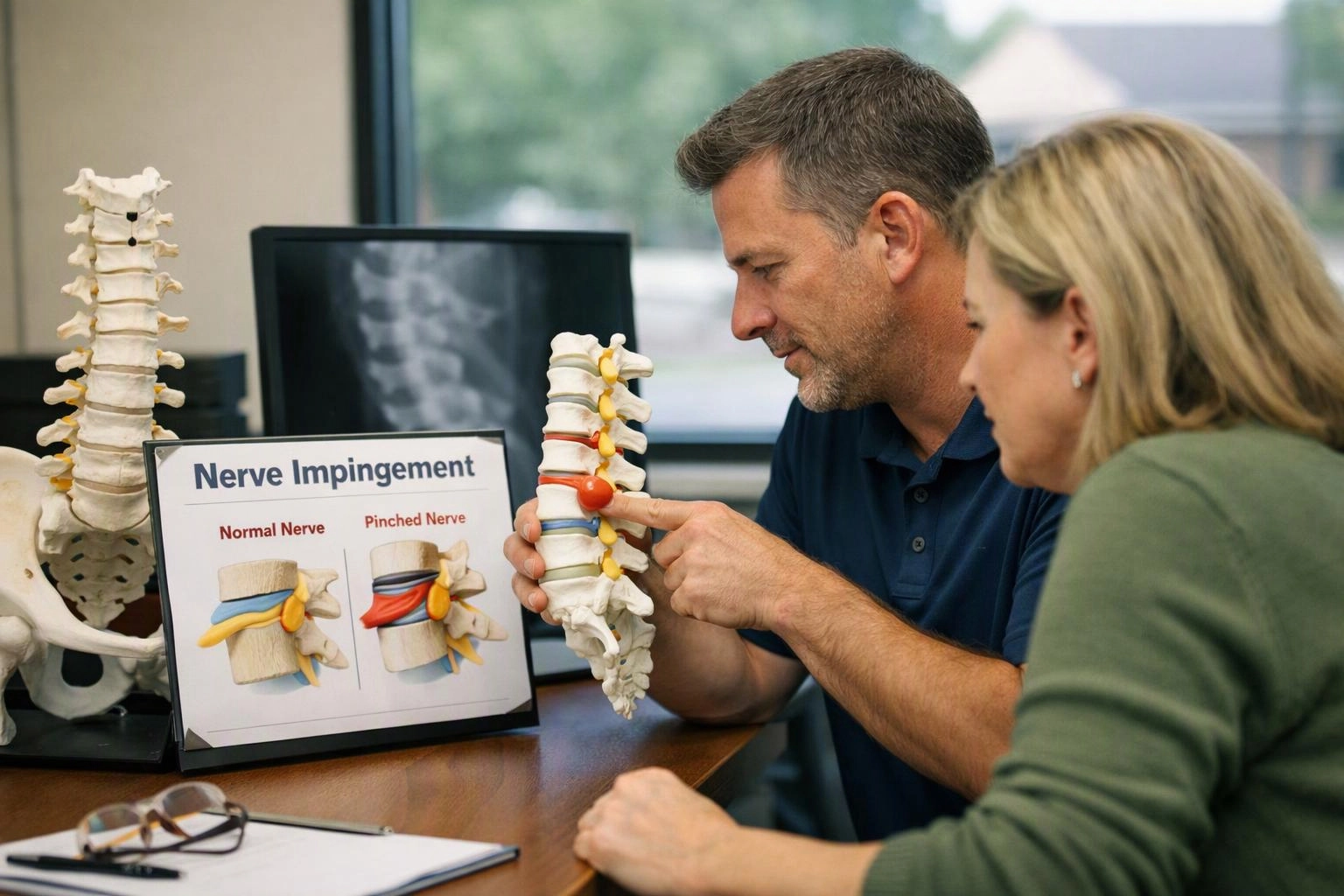
When we assess nerve impingement during Sciatica Treatment, we compare the symptom pattern with movement, strength, sensation, and reflex findings. Our team also considers nearby joints and soft tissue because several structures can create similar symptoms. This helps us choose an appropriate care plan and recognize findings that need further evaluation.
Nerve Impingement in Practice: A Real-World Example
A person with a lumbar disc problem may feel pain that travels from the lower back through the buttock and into the leg. During Sciatica Treatment, the symptom path and movement response help show whether nerve irritation may be contributing to the complaint.
Related Services
Related Terms
Bulging Disc
A bulging disc is a condition in which the outer portion of an intervertebral disc extends…
Disc Herniation
Disc Herniation is a spine condition in which the soft inner material of an intervertebral disc…
Sciatic Nerve
The sciatic nerve is the body’s largest peripheral nerve. It begins in the lower spine, passes…
Spinal Stenosis
Spinal Stenosis is a narrowing of the spaces within the spine that can reduce room for…
Advanced Injury Care Clinic
Have Questions About Nerve Impingement?
Contact Advanced Injury Care Clinic for practical guidance on Nerve Impingement and related chiropractor work in Hermitage.