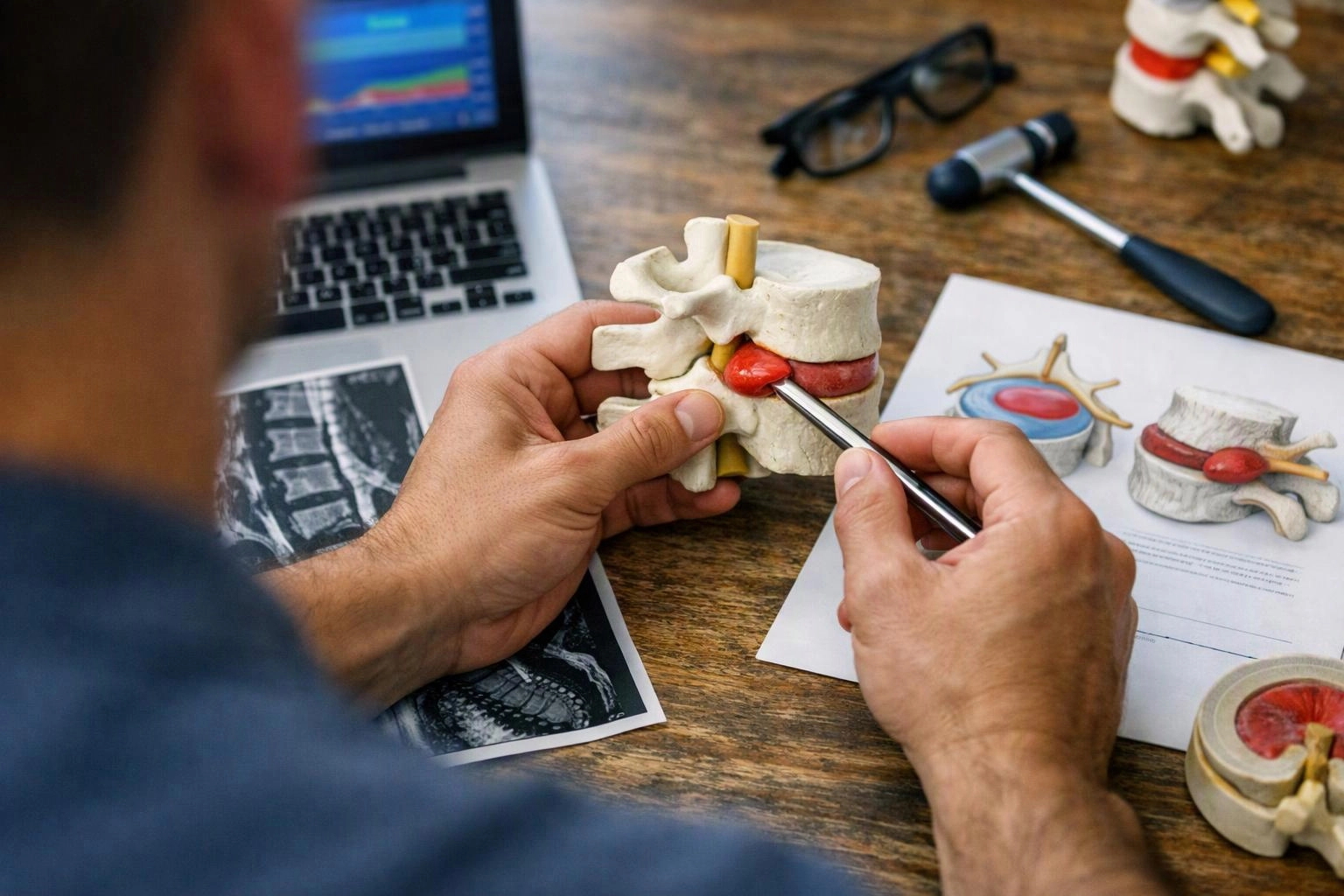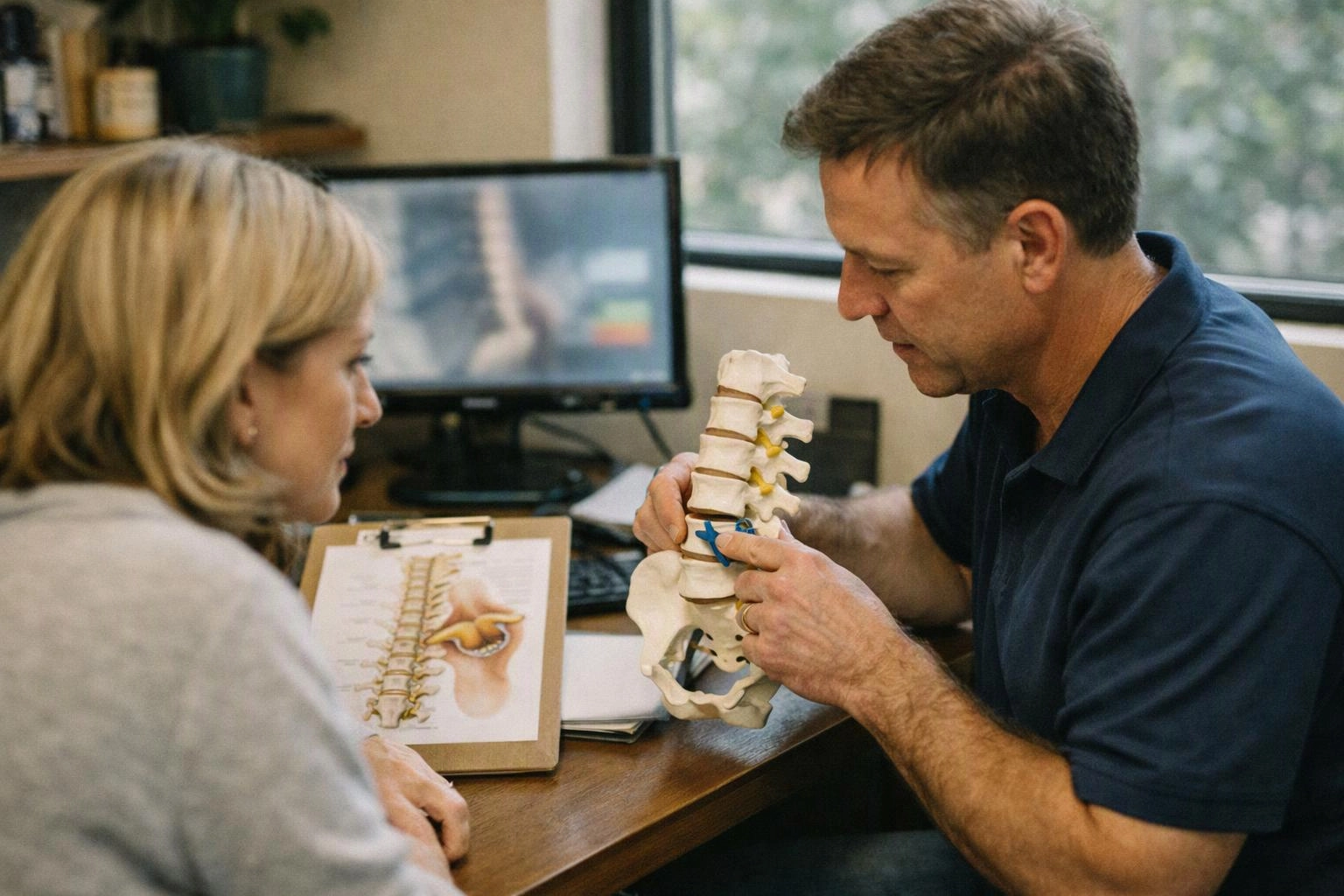
Disc herniation is a spinal condition where the soft, gel-like center of a spinal disc pushes through a tear in its tougher outer layer. This can press on nearby nerves, causing pain, numbness. Or weakness in the back, arms. Or legs. Disc herniation often occurs in the lower back or neck and is commonly linked to aging, injury. Or strain.
Category
Spinal injury
Used for
Diagnosing nerve-related back or neck pain
Common confusion
Often mistaken for muscle strain or arthritis
Also called
Herniated Disc, Slipped Disc
Often discussed with
Back Pain Treatment, Work Injury Treatment

Disc herniation occurs when the cushion-like discs between the bones of the spine (vertebrae) become damaged. Each disc has a soft, jelly-like center called the nucleus pulposus and a tougher outer ring called the annulus fibrosus. When a tear forms in the annulus, the nucleus can push through, creating a bulge or herniation. This bulge can press on nearby spinal nerves, leading to pain, tingling. Or muscle weakness in the area served by the nerve. While disc herniation can happen anywhere along the spine, it's most common in the lower back (lumbar spine) and the neck (cervical spine).
Related glossary terms: Pinched Nerve, Spinal Decompression, Chiropractic Adjustment.
The condition is often linked to natural wear and tear as people age. But it can also result from sudden injuries, such as lifting heavy objects incorrectly or twisting the spine forcefully. Symptoms vary depending on the location and severity of the herniation. For example, a lumbar herniation may cause sciatica—sharp pain that radiates down the leg—while a cervical herniation might lead to shoulder or arm pain. Not all disc herniations cause symptoms; some people may have a herniated disc without realizing it until it is discovered during imaging for another issue.
Diagnosing disc herniation typically begins with a physical exam and medical history review. A healthcare provider may check for areas of tenderness, muscle strength, reflexes. And nerve function. If symptoms suggest a herniated disc, imaging tests such as MRI (magnetic resonance imaging) or CT (computed tomography) scans are often used to confirm the diagnosis. These tests provide detailed images of the spine, allowing providers to see the location and size of the herniation and determine if it is pressing on a nerve. X-rays may also be used to rule out other causes of pain, such as fractures or arthritis. But they don't show soft tissues like discs.
The severity of a disc herniation is usually described in stages. A mild herniation may cause only minor discomfort. While a severe herniation can lead to significant pain, numbness. Or even loss of bladder or bowel control in rare cases. Treatment depends on the severity of symptoms and how much the herniation affects daily activities. Most people with mild to moderate disc herniations improve with conservative treatments, such as rest, ice or heat therapy, anti-inflammatory medications. And gentle exercises. Physical therapy can help strengthen the muscles supporting the spine and improve flexibility, reducing pressure on the affected disc.
Disc herniation matters because it can significantly impact quality of life. Pain, numbness. Or weakness caused by a herniated disc can make it difficult to perform everyday tasks, such as sitting, standing. Or lifting objects. In severe cases, the condition may interfere with work, sleep. Or physical activities, leading to frustration or depression. Early diagnosis and treatment are important to prevent symptoms from worsening and to avoid complications, such as chronic pain or permanent nerve damage. Understanding the condition also helps people make informed decisions about their care, whether that involves lifestyle changes, physical therapy. Or other treatments.
For many people, disc herniation is a temporary issue that improves with time and self-care. But ignoring symptoms or delaying treatment can lead to longer recovery times or the need for more invasive interventions, such as injections or surgery. Recognizing the signs of disc herniation and seeking appropriate care can help individuals return to their normal activities more quickly and reduce the risk of long-term problems. And learning proper body mechanics—such as lifting with the legs instead of the back, can help prevent future disc injuries.
Disc herniation becomes especially important in situations where it causes severe or worsening symptoms. For example, if pain spreads down the arms or legs. Or if numbness or weakness develops, it may indicate that the herniated disc is pressing on a nerve. In rare cases, a large herniation in the lower back can compress the nerves that control bladder or bowel function, a condition called cauda equina syndrome. This is a medical emergency requiring immediate attention to prevent permanent damage. People who experience sudden loss of bladder or bowel control, severe leg weakness. Or numbness in the groin area should seek emergency care.
Disc herniation also matters most for individuals whose jobs or hobbies involve heavy lifting, repetitive movements. Or prolonged sitting. Workers in construction, nursing. Or warehouse roles, as well as athletes or fitness enthusiasts, may be at higher risk for disc injuries. In these cases, learning proper techniques for lifting, bending. And sitting can help reduce the risk of herniation. And people who smoke, are overweight. Or have poor posture may be more likely to develop disc problems, making lifestyle changes an important part of prevention and recovery. For those with mild symptoms, staying active and avoiding prolonged bed rest can help speed up healing and prevent stiffness.
In Hermitage, TN, disc herniation is a common reason people seek chiropractic care. The region’s mix of office jobs, manual labor. And active lifestyles means many residents experience back or neck pain at some point. Chiropractors in the area often work with patients to manage disc herniation through non-surgical methods, such as spinal adjustments, decompression therapy. And exercise recommendations. Understanding the condition helps patients make informed choices about their treatment options and take steps to prevent future injuries.
Herniated disc and disc herniation refer to the same condition—both describe a spinal disc’s inner material pushing through its outer layer.
A pinched nerve occurs when a herniated disc or other tissue compresses a nerve. While disc herniation is the specific disc injury causing the compression.
Degenerative disc disease involves gradual wear and tear of spinal discs. While disc herniation is often a sudden tear or bulge in a disc.
Disc herniations often heal on their own. But persistent symptoms may indicate nerve irritation requiring targeted care. Gentle, controlled movement can help maintain mobility and reduce stiffness during recovery.
After lifting a heavy box at work, a warehouse employee feels sharp pain in their lower back that spreads down their leg. An MRI confirms a disc herniation pressing on a nerve. With rest, ice. And physical therapy, the pain gradually improves over several weeks.
Pinched Nerve is a condition where surrounding tissues, such as bones, cartilage, muscles. Or tendons, press against a nerve, causing pain, tingling, numbness. Or weakness. Pinched Nerve often occurs in areas like the neck, back. Or wrists and can result from injury, poor posture. Or repetitive motions. Symptoms may appear suddenly or develop gradually over time.
Spinal Decompression is a non-surgical treatment designed to relieve pressure on the spine and spinal nerves. It involves gently stretching the spine using a motorized table or traction device. This process helps create space between vertebrae, allowing herniated or bulging discs to retract and promoting healing by improving blood flow and nutrient exchange.
Chiropractic Adjustment is a precise manual procedure where a licensed chiropractor applies controlled force to a joint in the spine or other body part. The goal is to improve alignment, reduce pain. And restore normal movement. Adjustments are often performed using hands or specialized instruments and are tailored to each patient’s condition.
Decompression Therapy is a non-surgical treatment designed to relieve pressure on spinal discs and nerves by gently stretching the spine. This therapy uses a motorized table or device to create negative pressure within the disc, promoting retraction of herniated or bulging discs and improving nutrient flow to affected areas. It's commonly used for back pain, sciatica. And disc-related conditions.
Advanced Injury Care Clinic
Contact Advanced Injury Care Clinic for practical guidance on Disc Herniation and related chiropractor work in Hermitage.