
Skip to content

Spinal Decompression Therapy in Forest Hills, Tennessee

Disc irritation can keep back pain active in Forest Hills. Our chiropractor checks your symptoms and explains whether spinal decompression therapy fits your care plan.

Upfront, Transparent PricingServing 18 CommunitiesMon-Fri: 9 am–7 pm, Sat: 9 am–2 pm, Sun: ClosedFast Scheduling

Quick Summary: Spinal Decompression Therapy in Forest Hills, Tennessee

Spinal Decompression Therapy in Forest Hills is provided by Advanced Injury Care Clinic for disc irritation, back pain, sciatica, and related musculoskeletal concerns. Care includes an individualized evaluation and an evidence-informed plan that may include spinal decompression, soft tissue therapy, and therapeutic exercise.

  • What we do: Advanced Injury Care Clinic provides Spinal Decompression Therapy for disc irritation and related back, neck, and musculoskeletal concerns in Forest Hills, Tennessee.
  • What is included: Individualized evaluation, spinal decompression, soft tissue therapy, therapeutic exercise, posture guidance, and rehabilitation support.
  • What you get: The patient receives a clear care plan that addresses symptoms, treatment fit, and support for better movement.

Why does disc irritation keep causing back pain, and when should I ask about spinal decompression therapy?

Disc irritation can affect nearby nerves and movement, which may contribute to recurring back pain or sciatica. A chiropractic evaluation helps identify the likely source and checks whether spinal decompression therapy fits the symptoms. Sudden weakness, loss of bladder or bowel control, or severe unexplained pain needs prompt medical attention.


Spinal Decompression Therapy for Forest Hills Disc Irritation

Spinal decompression therapy is considered after an evaluation of symptoms, movement, health history, and possible nerve involvement. Our team may discuss this approach for back pain, neck pain, sciatica, or symptoms linked to disc irritation.

The key decision is treatment fit. Spinal decompression therapy isn't right for every condition, and symptom changes need review during care. We may combine it with soft tissue therapy, therapeutic exercises, posture guidance, or rehabilitation support when those steps match the findings.

Patients comparing care in Forest Hills need a clear explanation of what the treatment targets and what it cannot address. We explain the assessment, likely treatment options, and follow-up plan before care proceeds.

  • Review symptoms such as back pain, neck pain, sciatica, and radiating discomfort.
  • Complete a health history and physical examination.
  • Discuss X-rays if they are clinically indicated.
  • Check whether spinal decompression fits the condition and treatment goal.
  • Explain possible muscle soreness, temporary discomfort, or treatment sensitivity.
  • Set a follow-up plan for symptom changes and progress.
A woman in a blue shirt holds her head while standing beside a chair, mat, and water bottle

Service Overview

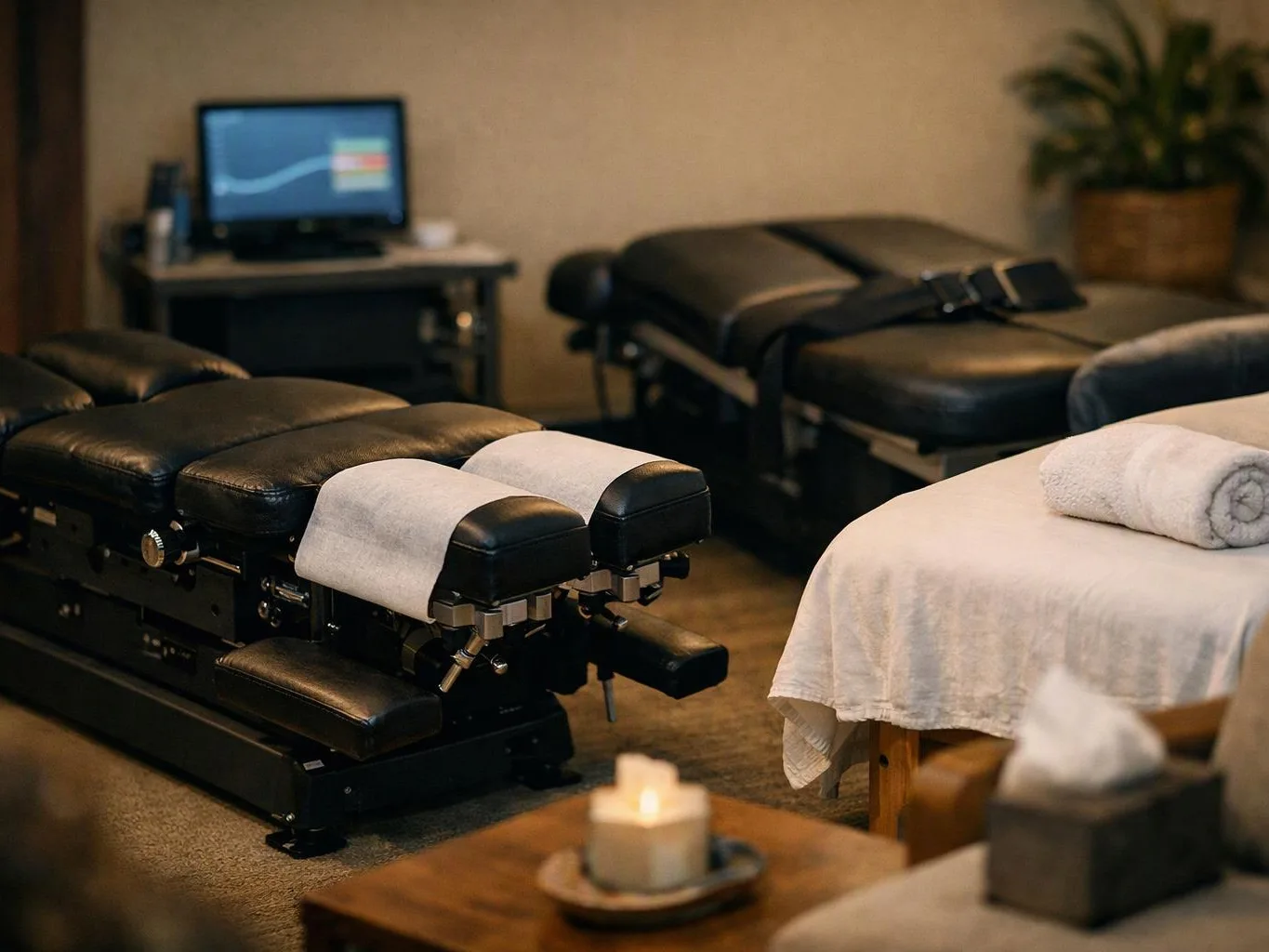
Spinal decompression therapy is a non-invasive treatment approach that uses controlled unloading to address certain back and neck complaints.

  • Unlike a spinal adjustment, it focuses on gradual traction through a spinal decompression table instead of a quick joint impulse.
  • Advanced Injury Care Clinic provides this care for patients in Forest Hills through an evaluation and personalized treatment plan.

What This Care May Change

Spinal decompression may help reduce stress linked to some disc-related symptoms.

A measured treatment plan can support better mobility during recovery.

Soft tissue therapy and therapeutic exercise can address muscle tension and movement limits.

Clear explanations help you understand why a treatment is being considered.

Follow-up checks help identify sensitivity, soreness, or symptom changes early.

Process

How We Deliver Spinal Decompression Therapy

1

Review your health history

We discuss your symptoms, prior injuries, current care, and treatment goals during the new patient intake.

2

Examine movement and symptoms

We assess movement, pain patterns, and possible nerve involvement. X-rays are considered if clinically indicated.

3

Explain treatment fit

We explain how spinal decompression may address the findings and discuss possible muscle soreness, temporary discomfort, or sensitivity.

4

Set the care plan

We create an individualized plan that may include decompression, soft tissue therapy, therapeutic exercise, posture guidance, or rehabilitation support.

5

Review symptom changes

We check how symptoms respond and discuss changes that could call for a different treatment decision.

What Patients Get From This Approach

A fit check before treatment

We review your symptoms, health history, and movement before choosing spinal decompression. The service is the wrong fit when another condition needs a different medical evaluation.

Care matched to your findings

An individualized plan may combine spinal decompression with soft tissue therapy, posture guidance, or therapeutic exercise. We explain why each part is included.

Clear clinical explanations

A licensed chiropractor explains the findings and care options in plain language. You can ask about treatment sensitivity, muscle soreness, and temporary discomfort before starting.

What Spinal Decompression Therapy Includes

Advanced Injury Care Clinic provides comprehensive Spinal Decompression Therapy in Forest Hills. Here's what you get:

  • We begin with a new patient intake, health history, and examination.
  • We review movement, pain patterns, and signs that may relate to disc irritation.
  • We explain spinal decompression and how it differs from spinal adjustments.
  • We build an individualized, evidence-informed treatment plan.
  • We may add soft tissue therapy, therapeutic exercise, posture guidance, or rehabilitation support.
  • We review symptom changes and adjust the care plan when needed.

Spinal Decompression and Related Care

These approaches differ in how they address movement, soft tissue tension, and spinal loading.

Care optionMain focusHow we decide
Spinal decompression therapyControlled traction through a spinal decompression tableSymptoms, examination findings, and treatment sensitivity
Spinal adjustmentA targeted joint adjustment using an appropriate techniqueJoint movement, examination findings, and the care plan
Soft tissue therapyMuscle tension and related movement limitsPalpation, range of motion, and symptom response

The Advanced Injury Care Clinic Standard

  • Assess Patient Condition
  • Tailored Care Plans
  • Clear Treatment Explanations
  • Monitor Patient Progress

Questions About Spinal Decompression Therapy

Are there risks associated with spinal decompression therapy?

Disc irritation care can involve muscle soreness, temporary discomfort, treatment sensitivity, or symptom changes. We discuss these possibilities before treatment and monitor your response during follow-up. Severe or unusual symptoms need prompt medical attention. Our first step is an evaluation that checks whether spinal decompression fits your condition.

How does the first visit decide whether this treatment fits?

The first visit uses your health history, symptoms, movement, and examination findings to assess treatment fit. X-rays may be considered if clinically indicated. We then explain the findings and discuss whether spinal decompression, soft tissue therapy, exercise, or another care option belongs in the plan.

What should I bring after an auto accident?

Auto accident records, imaging reports, and a list of current medicines can help us review your condition. Bring any documents you already have, but don't delay care if records aren't available. We complete our own intake and examination before discussing a personalized treatment plan.

Which symptoms need medical attention before treatment?

Sudden weakness, loss of bladder or bowel control, severe unexplained pain, or major changes in sensation need prompt medical attention. Spinal decompression isn't a substitute for urgent evaluation. Tell us about any new or worsening symptoms during your consultation so we can guide the next step.

When might soft tissue therapy be added?

Soft tissue therapy may be added when muscle tension or restricted movement contributes to your symptoms. We use the examination findings to decide whether it belongs in the plan. Therapeutic exercise or posture guidance may also support movement as your care progresses.

Why might symptoms change after a session?

Symptom changes can reflect treatment sensitivity, muscle soreness, or the body's response to a new movement load. We need to know what changed, where it changed, and how strongly you feel it. That information helps us review the plan and decide whether care should be adjusted.

Who provides spinal decompression therapy at this clinic?

Advanced Injury Care Clinic provides spinal decompression therapy through a licensed chiropractor and an individualized care plan. The process includes an evaluation, an explanation of findings, and follow-up guidance. Related care may include soft tissue therapy, therapeutic exercises, and posture guidance.
Contact

Discuss Spinal Decompression Therapy in Forest Hills

Start with a health history and movement assessment. Advanced Injury Care Clinic will explain whether spinal decompression fits your symptoms and outline the next care step.

Pregnant woman sits smiling in a chair while a man reads a folder beside a table with tissues and water

Spinal Decompression Therapy in Other Areas

The health and wellness information on this website is for general informational purposes only and is not medical advice. It does not create a provider-patient relationship. Always consult a qualified licensed provider in Hermitage, Tennessee, United States about your specific condition before making care decisions. Individual results vary.

(615) 265-0412