Understanding Sacroiliac Joint Dysfunction
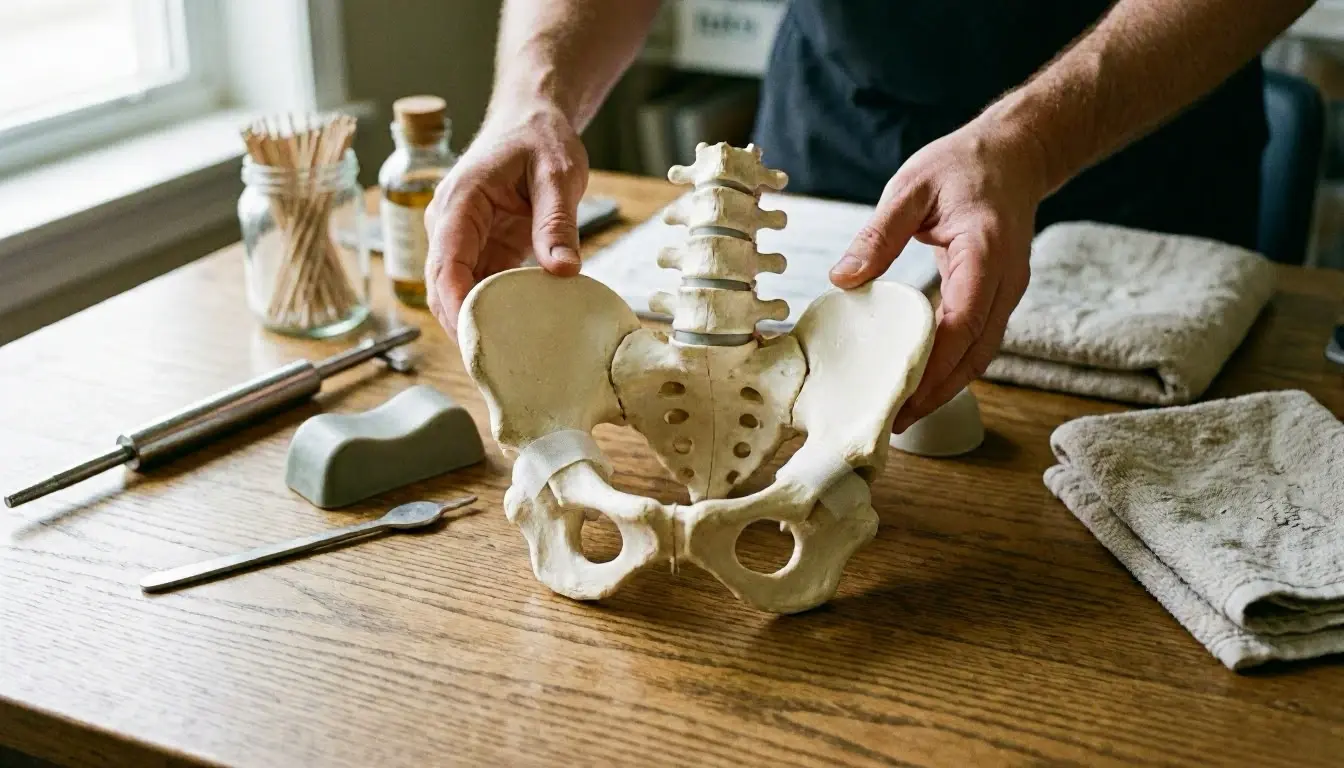
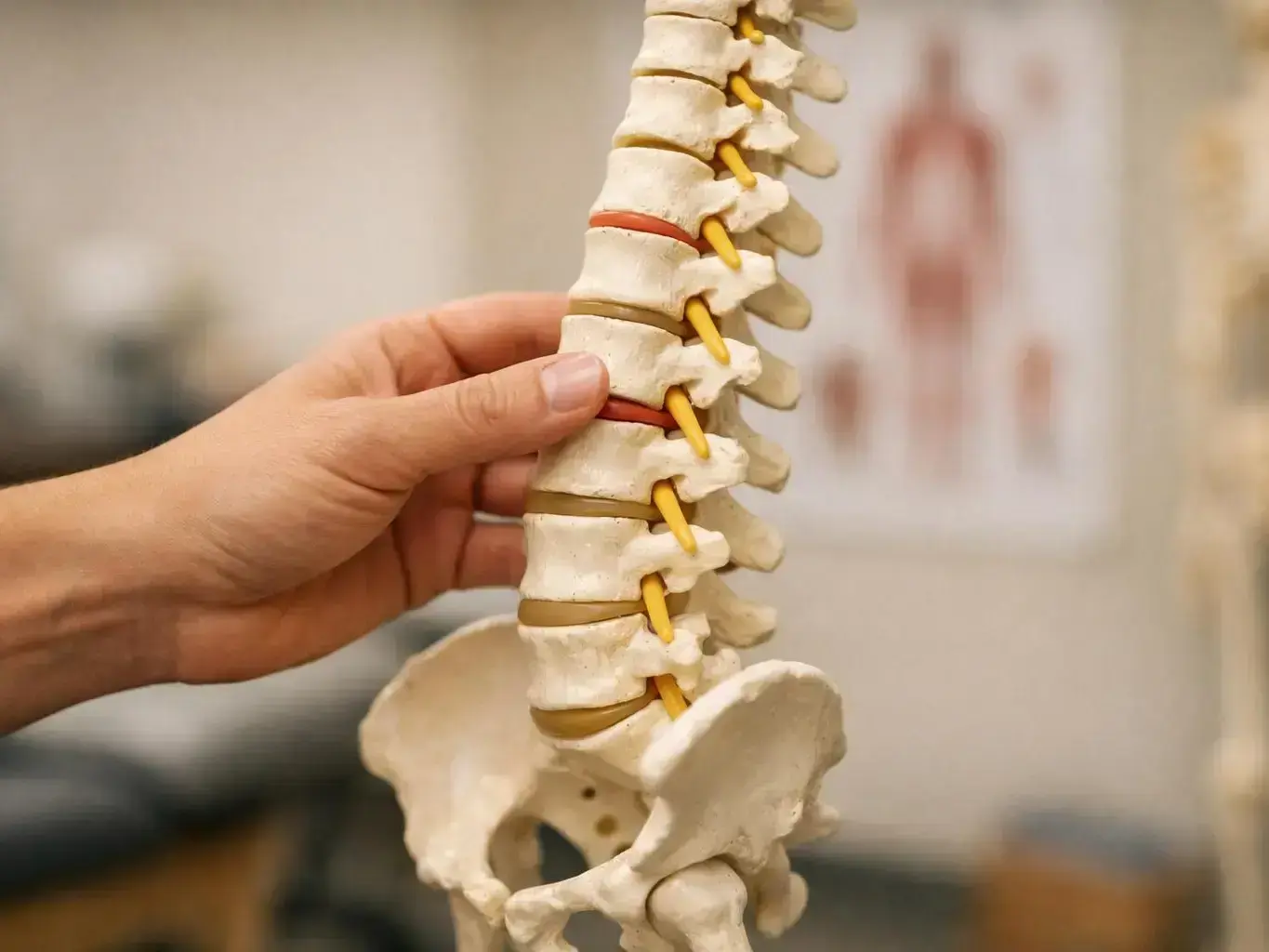
Sacroiliac Joint Dysfunction happens when the SI joints don't work right. These joints connect the lower spine to the pelvis.
Related glossary terms: Herniated Disc, Spinal Manipulation, Chiropractic Adjustment.
They act like shock absorbers. They also support the weight of the upper body.
When these joints get too stiff or loose, they cause pain. Pain can be in the lower back, hips. Or legs.
The pain may feel sharp or dull. It often gets worse when you stand, walk. Or climb stairs.
This problem is common. But people often miss it. That's because it feels like other issues.
It's not the same as a herniated disc (a slipped disc) or sciatica (nerve pain). SI joint pain comes from the joints where the spine meets the pelvis.
Pain usually stays on one side of the body. Sometimes it can hurt on both sides.
Heavy lifting or sitting too long can make the pain worse.
How Sacroiliac Joint Dysfunction Works?
The sacroiliac joints move a little. They help spread weight from the upper body to the legs.
They don't move much. But when they move too little or too much, it causes problems.
This can irritate the muscles and ligaments around them. That causes swelling and pain.
Many things can cause this problem. A fall or car accident can hurt the joints.
Pregnancy can loosen the joints too. That happens because of hormone changes.
Arthritis or running a lot can also cause it.
A doctor checks for this problem. They look for pain and how the joints move.
They may do tests like the FABER test. This test checks for pain with certain moves.
Another test is Gaenslen’s test. It also checks for pain.
X-rays or MRIs (pictures of bones) may be used. But they don't always show the problem.
A shot in the joint can help find the pain. If the pain goes away, the joint is the problem.
Why Sacroiliac Joint Dysfunction Matters?
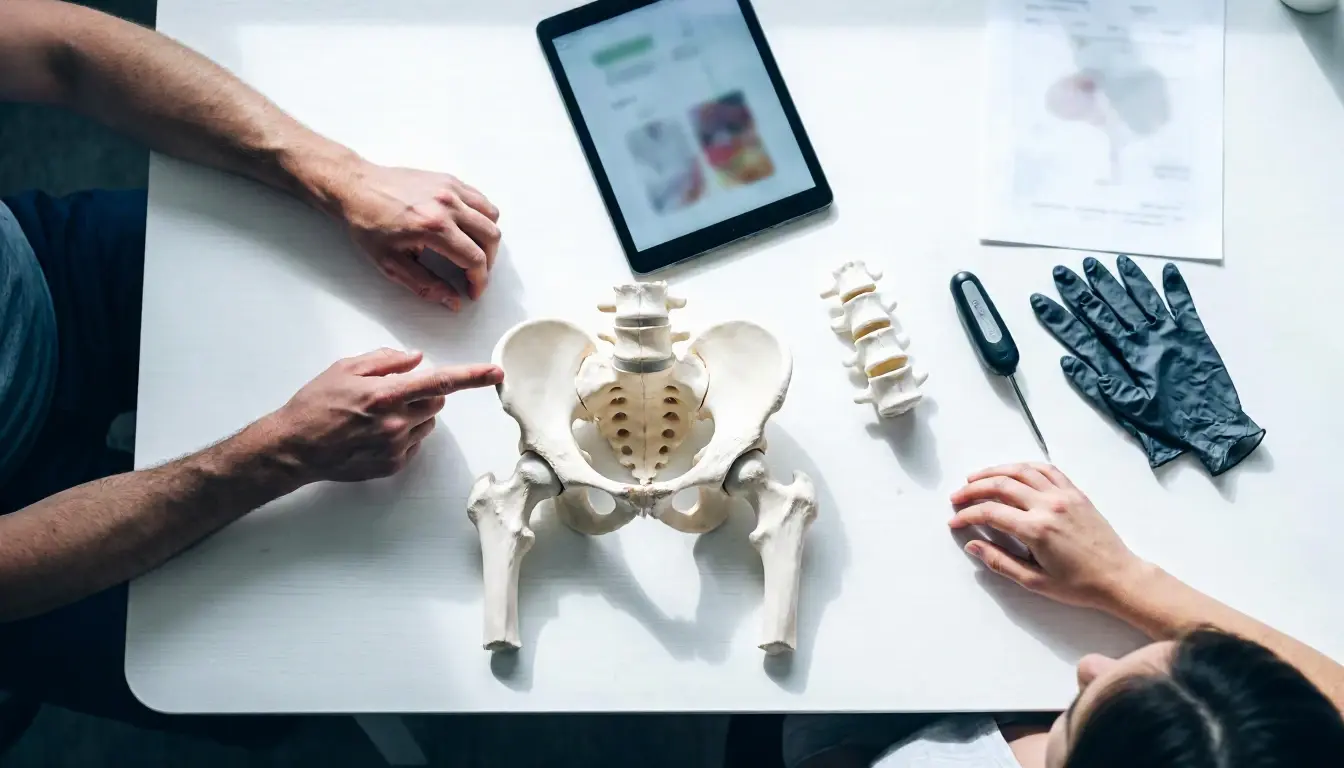
Sacroiliac Joint Dysfunction matters a lot. It can make life hard.
Pain can make sitting or walking tough. This can make people frustrated.
If not treated, pain can get worse over time. It may hurt other body parts too.
Early treatment can stop long-term problems. It can help you move normally again.
Many people can manage this problem. Chiropractic care (joint adjustments) can help.
Physical therapy can make muscles stronger. Strong muscles support the joints better.
Medicine can reduce swelling. In bad cases, shots or surgery may be needed.
But these are only used if other treatments don't work.
Knowing about this problem helps you make good choices.
When Sacroiliac Joint Dysfunction Matters Most?
This problem matters most when pain gets in the way. It can make work or daily tasks hard.
People who sit or stand a lot may feel worse. This includes office workers or nurses.
Lifting heavy things can also make it worse. Construction workers may feel this pain.
Runners or weightlifters may get this problem too. Their joints get stressed a lot.
Pregnant women often get this pain. Hormones loosen their joints.
This problem can cause confusion. People may think they have other issues.
Someone with a herniated disc might get surgery. But the real problem could be the SI joint.
People with arthritis may think that's the only problem. But SI joint pain may also be there.
Knowing the signs early helps. It makes sure you get the right treatment.