
What Is the Spinal Cord?
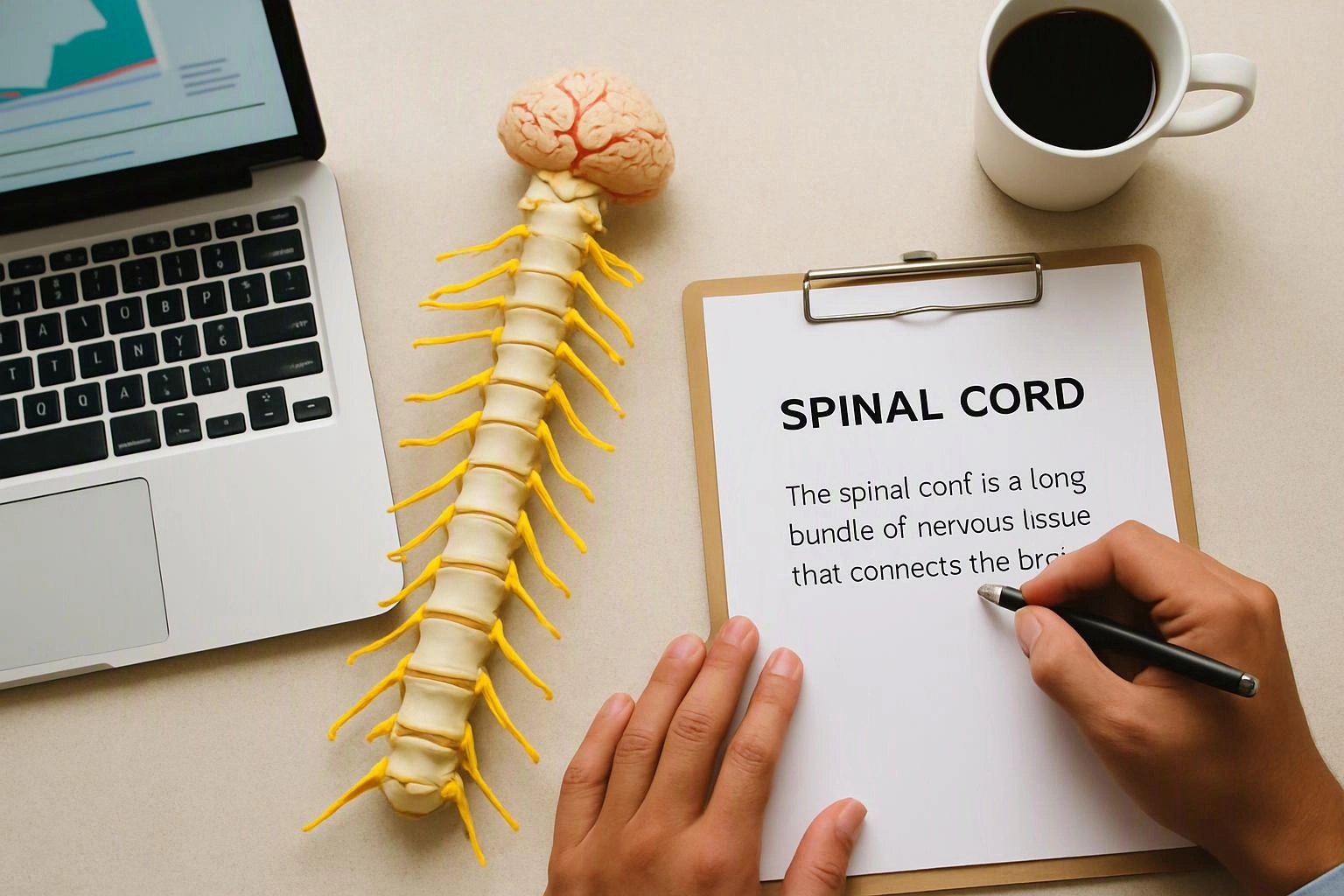
The spinal cord is a long bundle of nervous tissue that connects the brain with nerves throughout the body. It travels inside the spinal canal and carries signals involved in movement, sensation, and automatic body functions. The spinal cord also helps coordinate rapid protective responses through pathways that do not require immediate brain processing.
Quick Facts About Spinal Cord
Category
Central nervous system structure
Used for
Signal transmission and reflex coordination
Common confusion
Often confused with the spinal column
Often discussed with
Spinal Decompression Therapy
Key Takeaways About Spinal Cord
- It is nervous tissue, not a spinal bone or disc.
- The spinal cord travels inside the spinal canal.
- The spinal cord differs from the spinal column.
How Spinal Cord Works
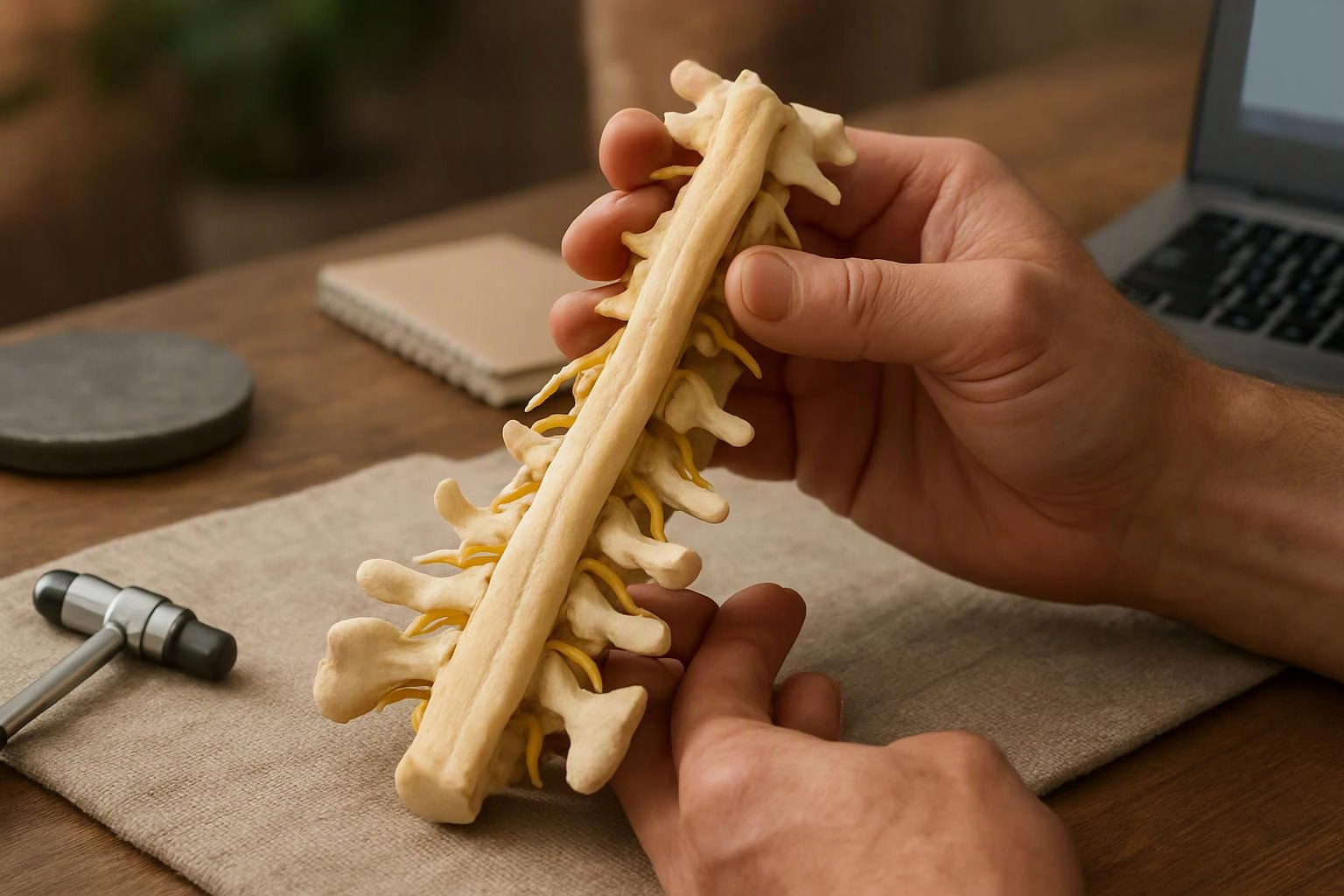
The spinal cord sends information between the brain and nerves that branch toward the body. Signals traveling downward support movement, while signals traveling upward carry information about touch, pressure, temperature, and body position. The cord also participates in reflexes that help the body respond quickly.
Related glossary terms: Cervical Spine, Intervertebral Disc, Lumbar Spine.
The spinal cord sits within the spinal canal, which is formed by connected vertebrae. Intervertebral discs and other tissues surround the vertebrae and help maintain space for the canal. In spinal decompression therapy, practitioners consider the relationship between spinal structures and nearby nerve tissues when developing a care approach. The therapy targets spinal loading and positioning, not the spinal cord itself.
From the Advanced Injury Care Clinic team
When we discuss spinal decompression therapy, we consider the spinal cord as part of the central nervous system and review the surrounding spinal anatomy. Our team distinguishes the cord from discs, joints, and nerves that branch from it. That distinction helps us describe the service accurately and keep care discussions focused on the person’s reported condition.
Spinal Cord in Practice: A Real-World Example
A person receiving spinal decompression therapy may ask whether the treatment directly stretches the spinal cord. The service focuses on controlled positioning of the spine and the surrounding structures, while the spinal cord remains protected within the spinal canal.
Related Services
Related Terms
Cervical Spine
Cervical Spine is the upper section of the vertebral column located in the neck. It supports…
Intervertebral Disc
An intervertebral disc is a flexible cushion between neighboring spinal bones called vertebrae. Each disc has…
Lumbar Spine
Lumbar Spine is the lower section of the vertebral column, located between the thoracic spine and…
Nerve Impingement
Nerve Impingement is a condition in which nearby tissue places pressure on a nerve, disrupting normal…
Advanced Injury Care Clinic
Have Questions About Spinal Cord?
Contact Advanced Injury Care Clinic for practical guidance on Spinal Cord and related chiropractor work in Hermitage.