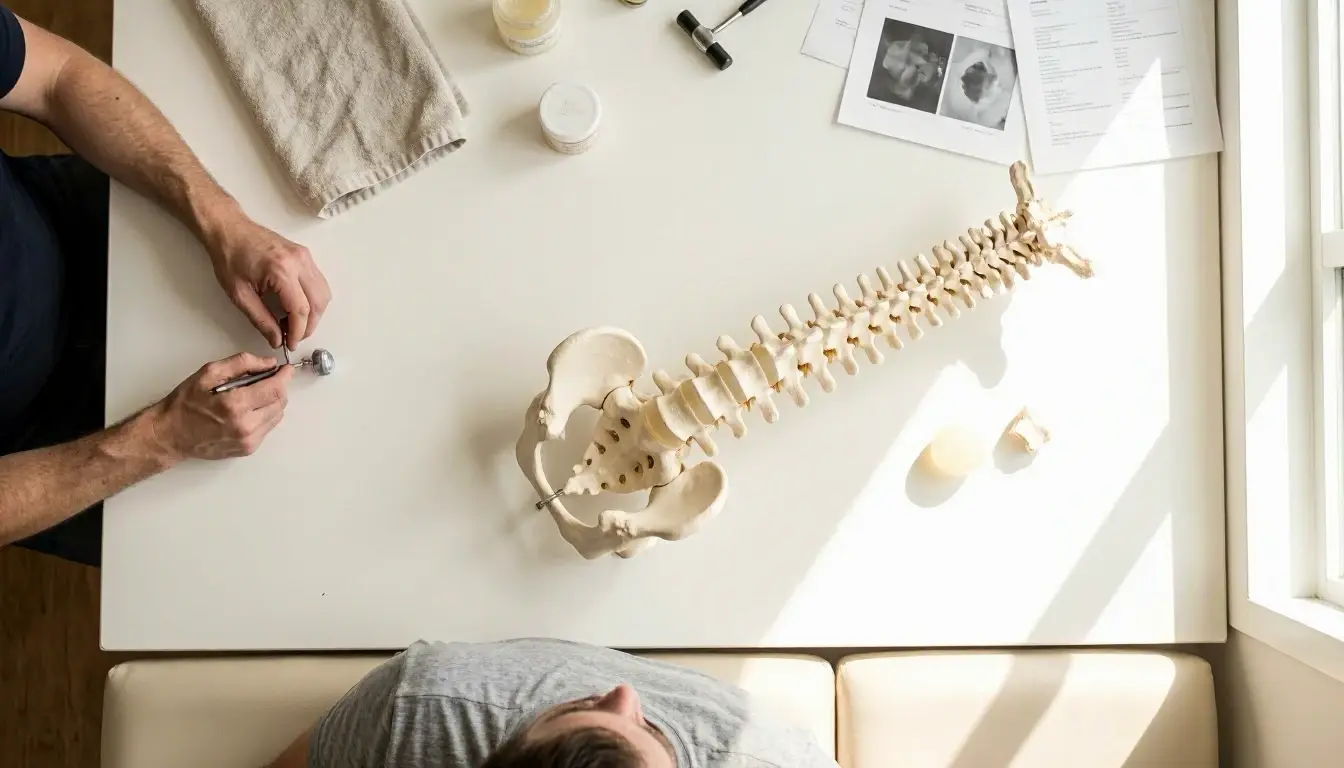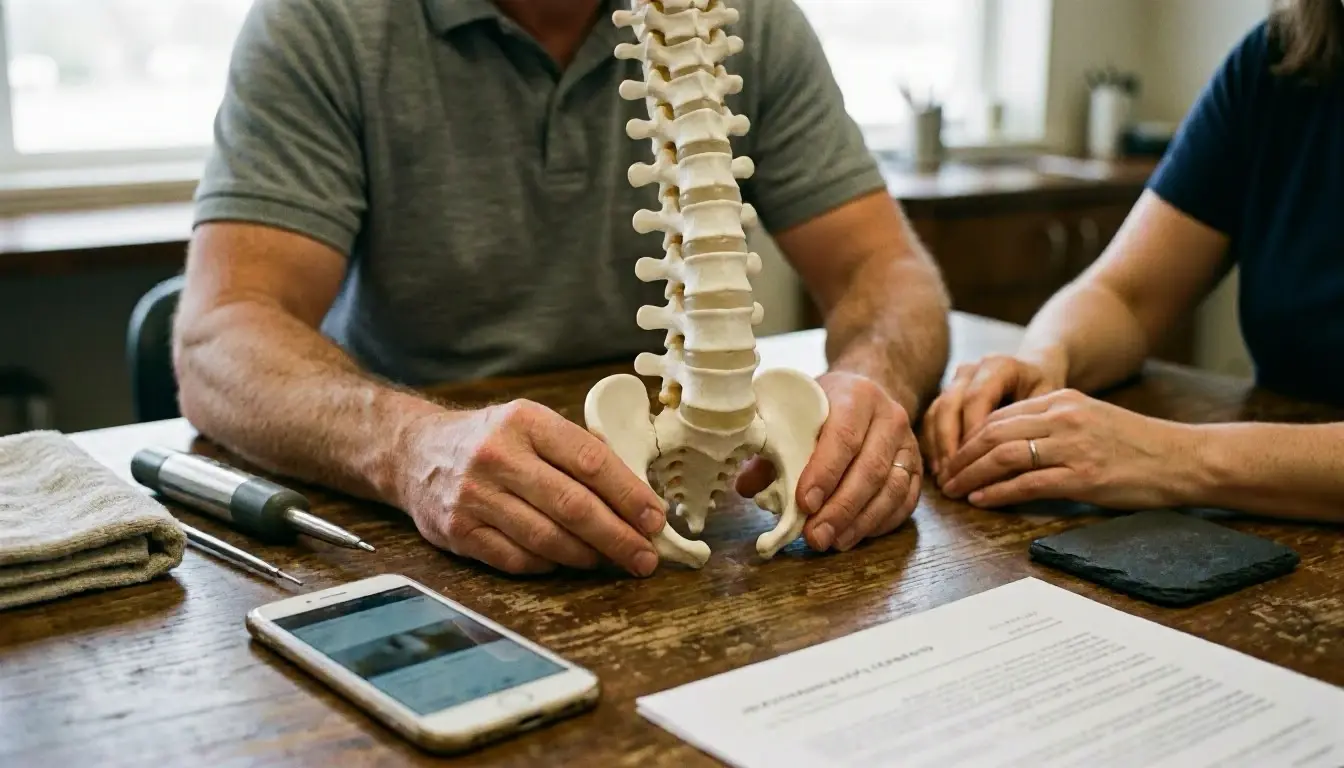
Intervertebral disc is intervertebral discs are soft, gel-like cushions located between the bones (vertebrae) of the spine. Each disc acts as a shock absorber, preventing vertebrae from rubbing together during movement. They also help maintain spinal flexibility and proper spacing for nerves exiting the spinal cord.
Category
Spinal anatomy
Used for
Shock absorption and spinal flexibility
Common confusion
Often mistaken for bone rather than soft tissue
Also called
Spinal disc, Disc
Often discussed with
Back Pain Treatment, Neck Pain Treatment

Discs are small but key parts of your spine. They sit between bones called vertebrae. This lets your spine bend and twist.
Related glossary terms: Disc herniation, Lumbar spine, Cervical spine.
Without discs, your spine would be stiff. You couldn't move smoothly. They help you walk, lift. And turn every day.
Your spine has 23 discs. They start under your skull. They end near your tailbone.
Each disc is about the size of a coin. The size changes a little. Neck discs are smaller. Lower back discs are bigger.
Even though they're small, discs matter a lot. They keep your spine healthy. They help you move well.
Each disc has two main parts. The first is the annulus fibrosus. It's the tough outer ring.
This ring is made of strong fibers. It holds the disc together. It connects to the bones above and below.
The second part is the nucleus pulposus. It's the soft center. It acts like a cushion.
It spreads out pressure. This keeps your spine safe.
When you move, discs squish and stretch. They soak up shock. For example, they flatten when you jump.
Then they go back to normal. This protects your spine from harm.
But discs change as you age. They lose water. They get less stretchy.
This makes them worse at soaking up shock. That's why back pain gets more common.
Discs also keep space between bones. This space is very important.
Nerves leave your spine through these gaps. If a disc bulges, it can press on nerves.
This causes pain, numbness. Or weakness. Keeping discs healthy stops this.

Healthy discs help you move without pain. They let your spine bend and twist.
They also hold weight. They spread out force across your spine.
This keeps stress off single bones. It's key when you lift, run. Or sit.
Disc problems can hurt daily life. A herniated disc (a bulging disc) can cause sharp pain.
It can make muscles weak. It can cause tingles in your arms or legs.
Even small disc wear can cause stiffness. It can make you move less. It can cause lasting pain.
Discs don't have blood flow. So they heal slowly. That's why care early matters.
Discs matter most during tough activities. Heavy lifting puts pressure on them.
So does bending a lot. Sitting too long can hurt them too.
Athletes, workers. And office staff can all have disc trouble. Their daily tasks can cause harm.
Even small injuries can hurt discs. A fall or car crash can damage them.
This can cause pain right away. Or it can cause pain later.
Discs change as you get older. They lose water. They get less stretchy.
This makes them wear out faster. This is called disc degeneration (disc wear).
It's a top cause of back pain in older adults. Good posture helps slow this.
So does staying active. Not smoking helps too.
Chiropractors (spine doctors) help keep discs healthy. They adjust spines.
They give exercises. They give tips for daily life.
In Hermitage, TN, many people work hard or stay active. Knowing about discs can help.
It can stop injuries. It can help you heal. It lets you make smart choices about spine care.
A disc herniation occurs when the inner gel of an intervertebral disc leaks through a tear in the outer ring, often pressing on nerves. Not all intervertebral discs are herniated. But herniation is a specific type of disc injury.
Vertebrae are the bony segments of the spine. While intervertebral discs are the soft cushions between them. Vertebrae protect the spinal cord. While discs absorb shock and allow movement.
Intervertebral discs rely on movement and hydration to stay healthy. Prolonged sitting or inactivity can reduce nutrient flow to discs, accelerating degeneration. Gentle spinal adjustments and targeted exercises can help maintain disc function and prevent stiffness.
After lifting a heavy box at work, a Hermitage resident feels sharp pain in their lower back that radiates down their leg. An MRI shows a herniated lumbar disc pressing on a spinal nerve. Chiropractic care focuses on reducing pressure on the disc through gentle adjustments and exercises to improve mobility.
Disc herniation is a spinal condition where the soft, gel-like center of an intervertebral disc pushes through a tear in the disc’s tough outer layer. This bulging or ruptured material can press on nearby nerves, causing pain, numbness. Or weakness in the back, neck, arms. Or legs. Disc herniations often occur in the lower back or neck due to injury, aging.
Lumbar spine is the lower part of the spine, made up of five large vertebrae labeled L1 to L5. These bones support most of the body’s weight and allow movements like bending, lifting. And twisting. The lumbar spine connects the upper body to the pelvis and legs, making it essential for daily activities and mobility.
Cervical spine is the uppermost part of the spinal column, consisting of seven vertebrae labeled C1 through C7. These bones support the skull, protect the spinal cord. And allow head movement. The cervical spine enables flexibility, balance.
Spinal decompression is a non-surgical treatment designed to relieve pressure on the spinal discs and nerves. It involves gently stretching the spine using a motorized table or device to create negative pressure within the discs, which can help herniated or bulging discs retract and promote healing by allowing oxygen, water.
Subluxation is a partial dislocation of a joint in the spine or other part of the body, where the bones are misaligned but still in contact with each other. Chiropractors identify subluxations as areas where movement is restricted or nerves may be irritated, potentially causing pain, reduced mobility.
ChiropractorHermitage.link
Contact ChiropractorHermitage.link for practical guidance on Intervertebral disc and related chiropractor work in Hermitage.